Blog
Entrance door materials: aluminium, wood or PVC? A comparison of the advantages and disadvantages
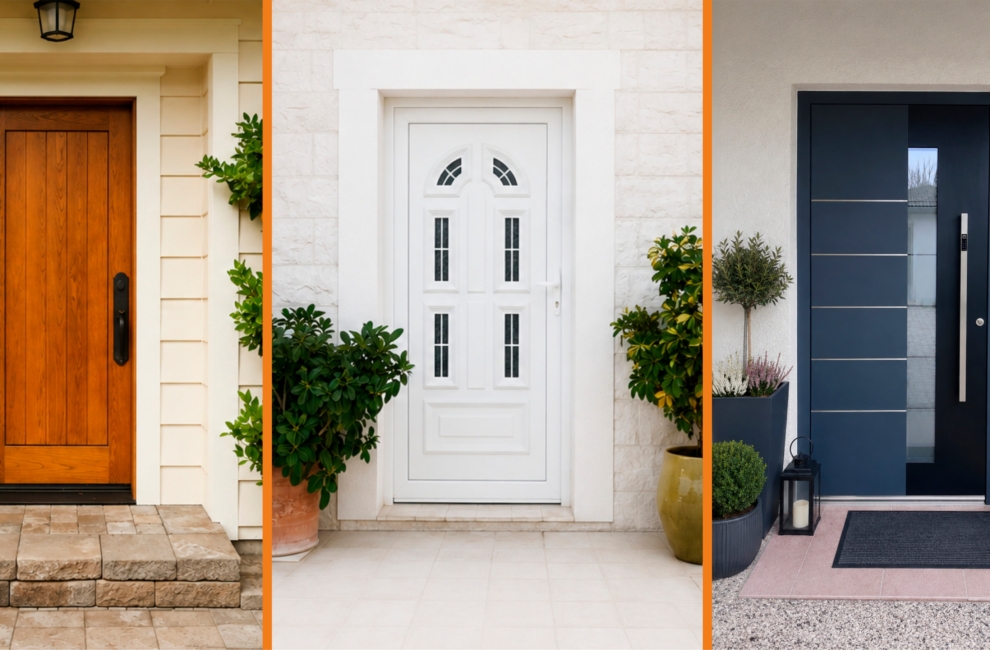
Choosing the right material is one of the most important decisions you can make when buying a front door. The choice of material has a significant impact on the structural stability, weather resistance, maintenance requirements, appearance and final price of the door. However, properties such as thermal insulation and burglary protection depend not only on the material itself, but also on the quality of the door’s construction, the components used and the standard of the installation.
As a front door is likely to last for decades, it's worth taking the time to understand the characteristics of the different materials before making your decision. Below, we compare the three most common materials: wood, PVC and aluminium.
- Wooden front doors are sure to impress with their natural and warm look.
- PVC front doors offer a cost-effective solution and are easy to maintain.
- Aluminium entrance doors combine high structural stability, minimal maintenance and a wide range of design options.
What is the best material for a front door?
Wooden front doors
PVC front doors
Aluminium front doors
Aluminium front doors made to measure
Comparing materials for a front door
Why do most people opt for aluminium these days?
What is the best material for a front door?
There is no single answer to this question. The best material for a front door is the one that best suits your needs, lifestyle and budget.
If a natural look is what matters most to you, you’ll probably choose wood. If you’re looking for an affordable solution, PVC is often a good choice. However, if you want doors that will retain their stability, appearance and excellent technical properties even after decades of use, more and more people are now opting for aluminium.
Wooden front doors
Wood is one of the oldest materials used to make front doors. Thanks to its natural texture and warmth, it remains a popular choice, particularly for classic, rustic and traditional homes.
The choice of wood is also important. High-quality wooden front doors are most commonly made from oak, larch or spruce, with each type of wood offering different levels of strength and resistance to moisture and the elements. Regardless of the type, however, wood is a natural, living material that is affected by numerous external factors.
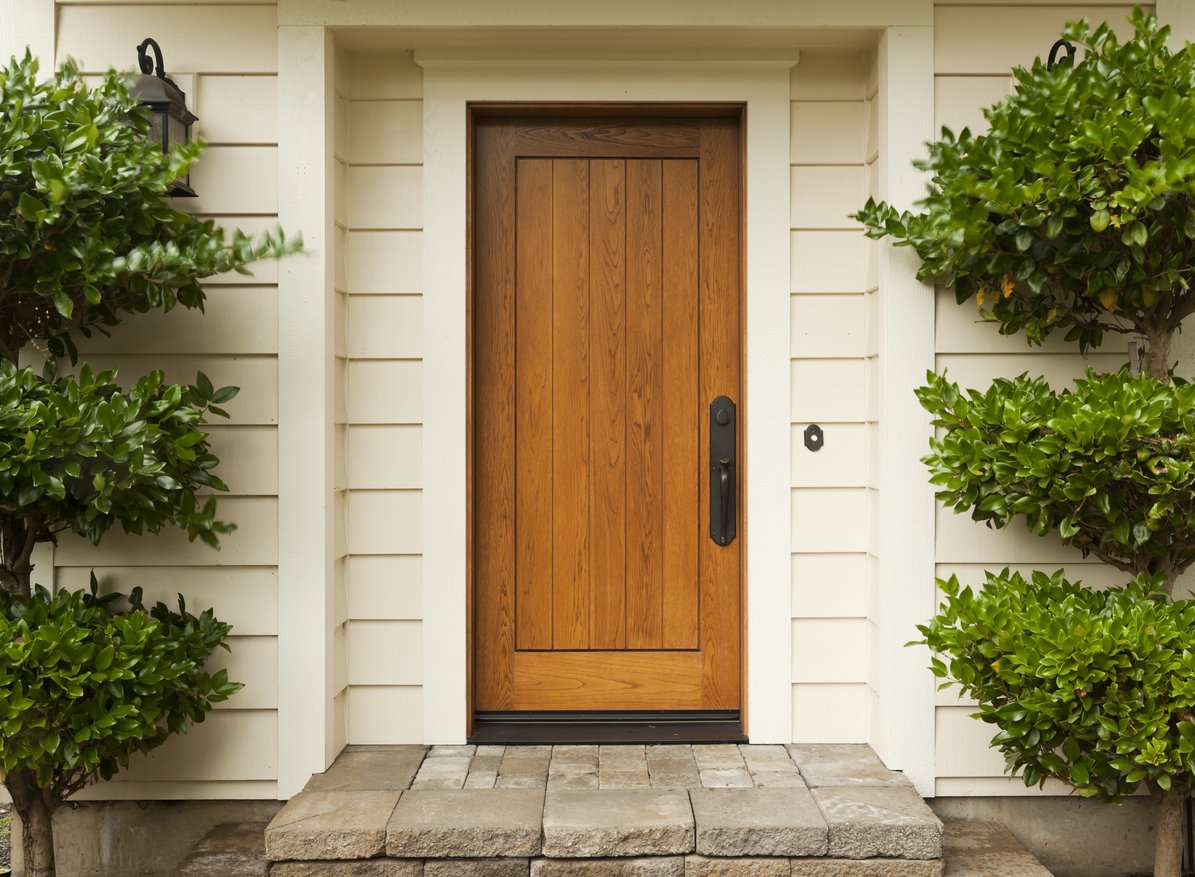
The advantages of wooden front doors
- A natural look: with their unique colours, textures and grain, wooden doors create a warm and timeless look. As every piece of wood is slightly different, every door is therefore unique and lends a room a special character.
- Good thermal and acoustic insulation: wood is a natural insulator, so high-quality wooden doors effectively reduce heat loss and dampen external noise.
- A renewable natural material: wood is a renewable resource, making it a good choice for anyone who cares about the environment. Responsible forest management and sustainable timber processing also play an important role in this regard.
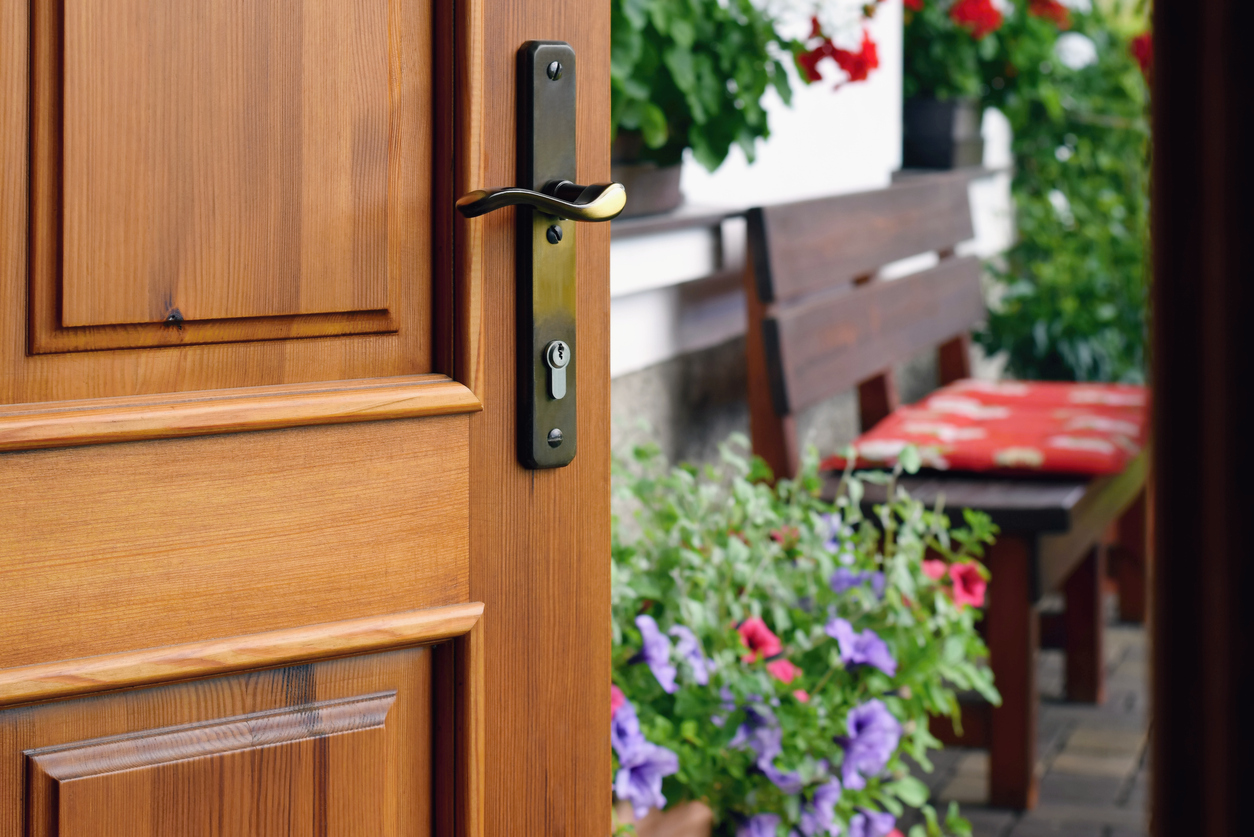
High-quality wooden doors effectively reduce heat loss and help block out external noise.
The disadvantages of wooden front doors
- Greater susceptibility to weather conditions: as woodis a natural material, it is more susceptible to moisture, UV radiation and temperature fluctuations. Modern coatings and advanced construction techniques have significantly improved the weather resistance of wooden front doors. However, their long-term performance still depends to some extent on their exposure to the elements and regular maintenance.
- Regular and more complex maintenance: wooden front doors require more maintenance than aluminium or PVC ones. The protective coating should be inspected regularly and, depending on exposure to the elements, refreshed periodically with a new coat of paint or varnish. Installing a canopy above the door is also recommended, as it provides additional protection from rain, snow and direct sunlight.
- A wooden front door’s lifespan depends largely on how well it is maintained: if it is well-made and regularly looked after, it can last for several decades. However, its durability depends largely on proper protection and regular maintenance.
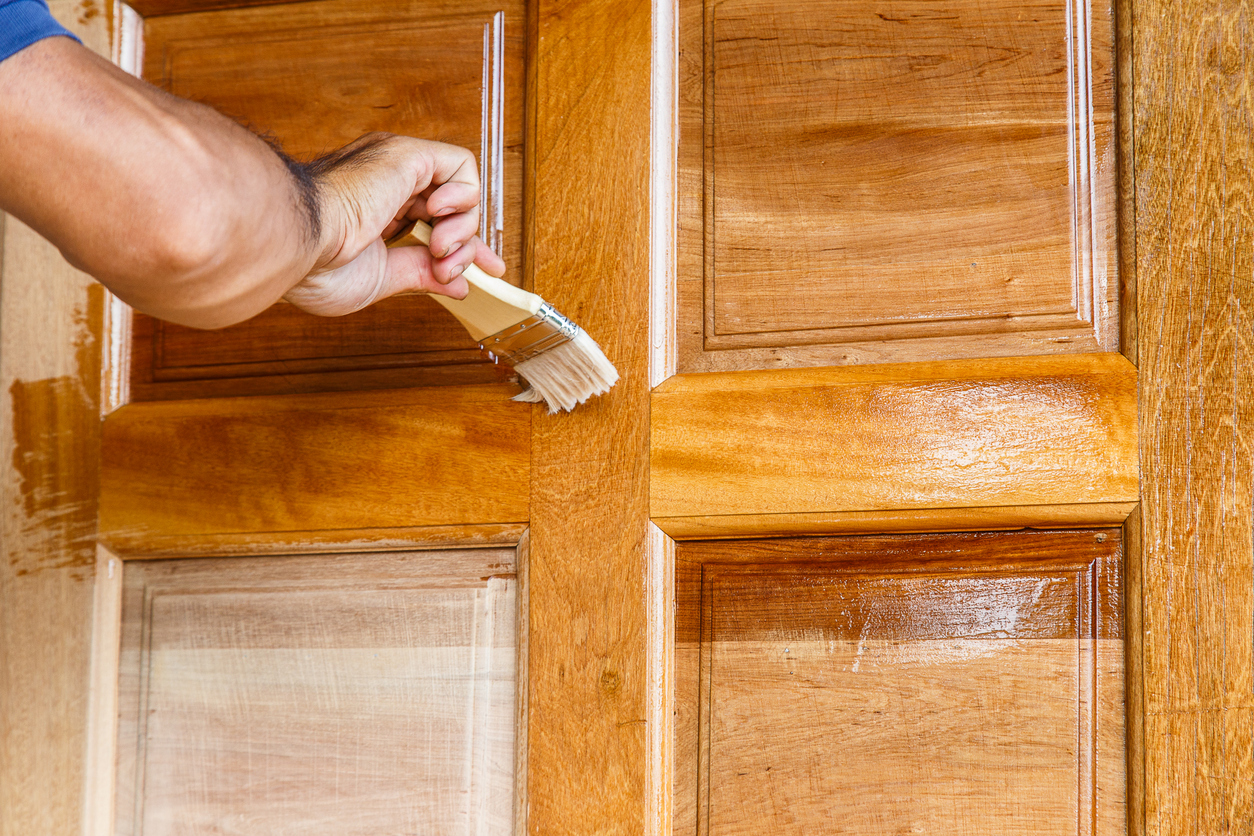
Who are wooden front doors best suited to?
Wooden doors are an excellent choice for anyone who prefers natural materials and doesn’t mind carrying out regular maintenance.
PVC front doors
PVC entrance doors became widely used in the second half of the 20th century with the development of modern PVC window and door systems. Thanks to their affordable price, good thermal insulation properties and ease of maintenance, they are a popular choice, particularly for projects where cost is a key consideration.
Although PVC is widely used for windows, it is somewhat less common for front doors. This is mainly because front doors are larger than windows and, due to their size and frequent use, need to provide a high level of structural stability.
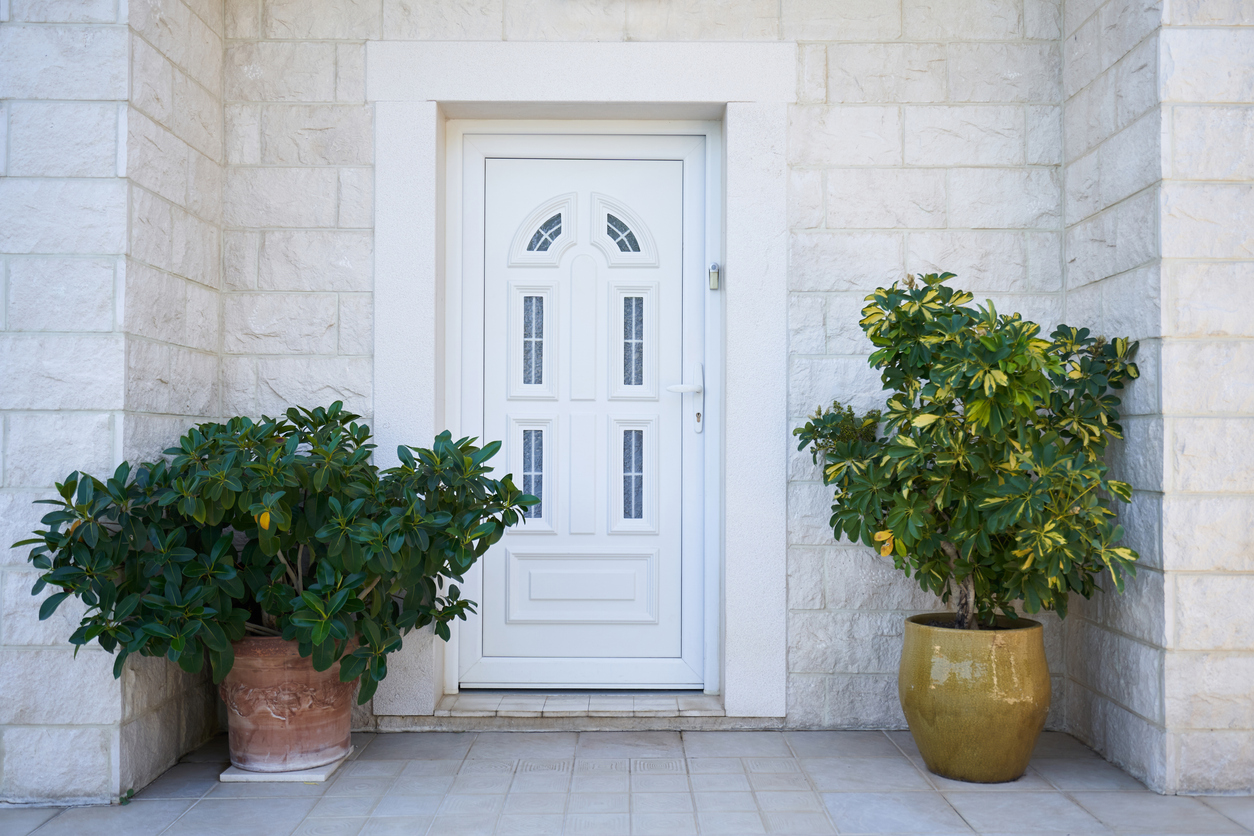
The advantages of PVC front doors
- A lower purchase price: PVC front doors are generally more affordable than wooden or aluminium ones.
- Good thermal insulation: PVC is a good thermal insulator, which is why good quality PVC doors effectively reduce heat loss.
- Easy to maintain: the doors do not require painting or varnishing; regular cleaning is usually sufficient to keep them looking their best.
- Good resistance to moisture: PVC does not absorb water, so it does not rot or corrode.
The disadvantages of PVC front doors
- Lower structural stability: as a general rule, PVC does not match the rigidity of aluminium when used at large scales; therefore, aluminium is more commonly chosen for larger elements in entrances.
- Greater thermal expansion: PVC has a higher coefficient of thermal expansion than aluminium; therefore, the quality of the profiles, the internal reinforcement and correct manufacturing are particularly important for the long-term stability of the doors.
- Colour fastness depends on the quality of the profiles: with lower-quality PVC profiles, prolonged exposure to the sun can cause the surface to fade or yellow.
- Design options are somewhat more limited: particularlywhen it comes to larger sizes, minimalist designs and special shapes, PVC doors offer fewer design options than aluminium.
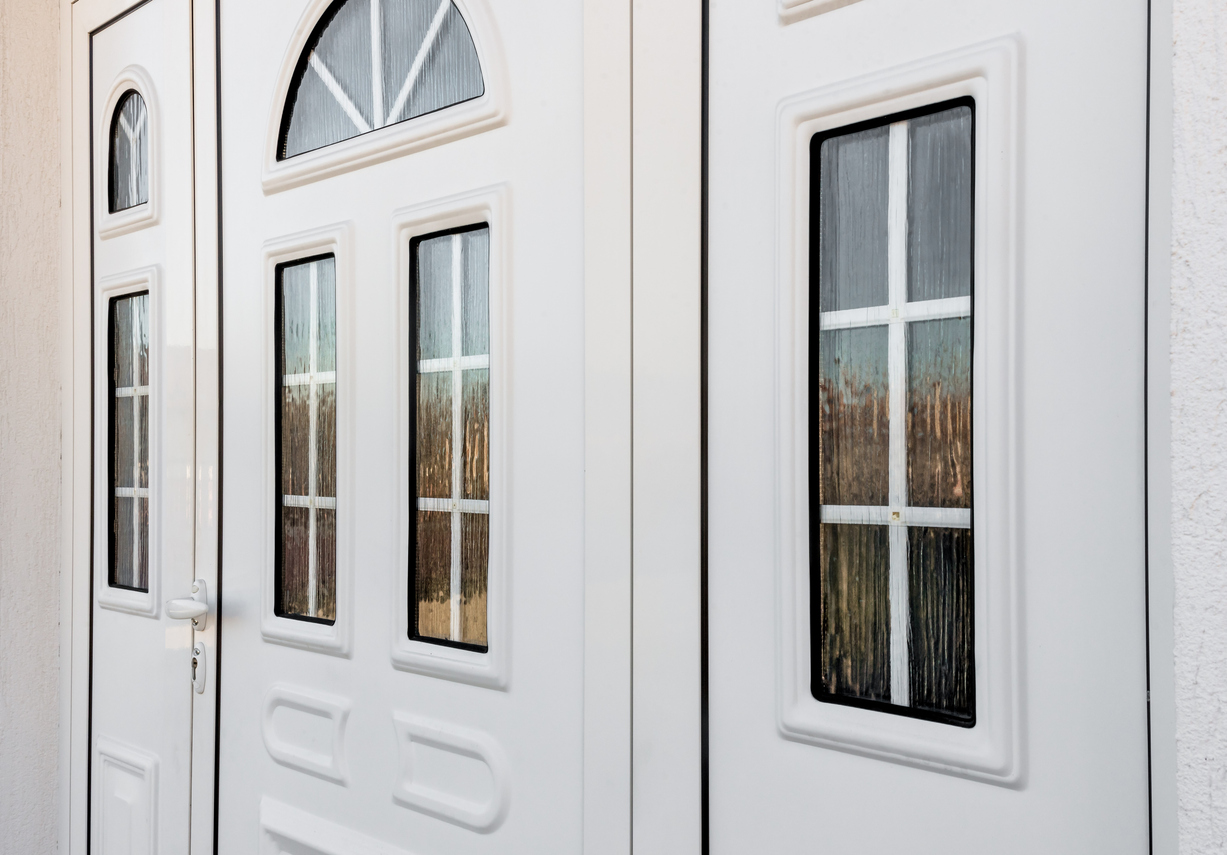
Who are PVC front doors best suited to?
PVC front doors are best suited to homeowners looking for an affordable option, for whom maximum structural stability is not the primary consideration.
Aluminium front doors
Aluminium front doors began to gain widespread popularity towards the end of the 20th century, and today they are among the most common choices for new builds and renovations.
Their popularity is primarily due to their structural stability, long service life and almost unlimited design possibilities, which allow them to be adapted to a variety of architectural styles. On top of that, they are environmentally friendly, as aluminium is fully recyclable.
Inotherm manufactures aluminium front doors that you can customise to your exact requirements using our online configurator.
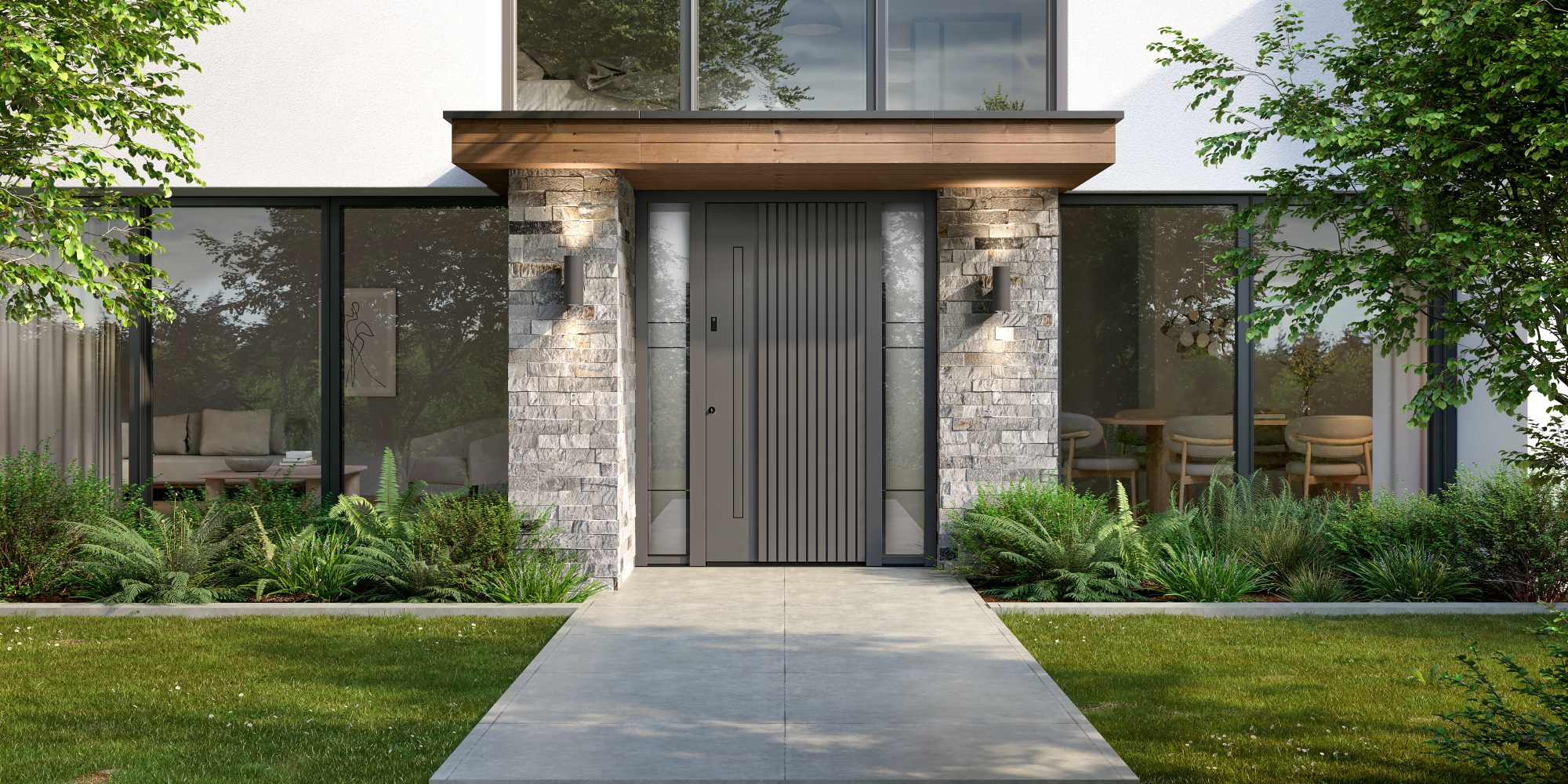
The advantages of aluminium front doors
- Exceptional structural stability: aluminium is a very rigid material, which means it can be used to manufacture even larger entrance doors with extensive glazed surfaces. Thanks to their high-quality design and construction the doors retain their shape and stability over the long term.
- Resistance to corrosion and weathering: aluminium does not rust and offers excellent resistance to rain, snow, UV radiation and temperature fluctuations, allowing it to retain its performance and appearance for many years.
- Minimal maintenance: to maintain the door’s appearance, occasional cleaning is usually sufficient; aluminium doors do not need to be painted or varnished.
- Wide range of design options: aluminium allows for the manufacture of doors in a variety of sizes, shapes and colour finishes, making it suitable for both contemporary and traditional architecture.
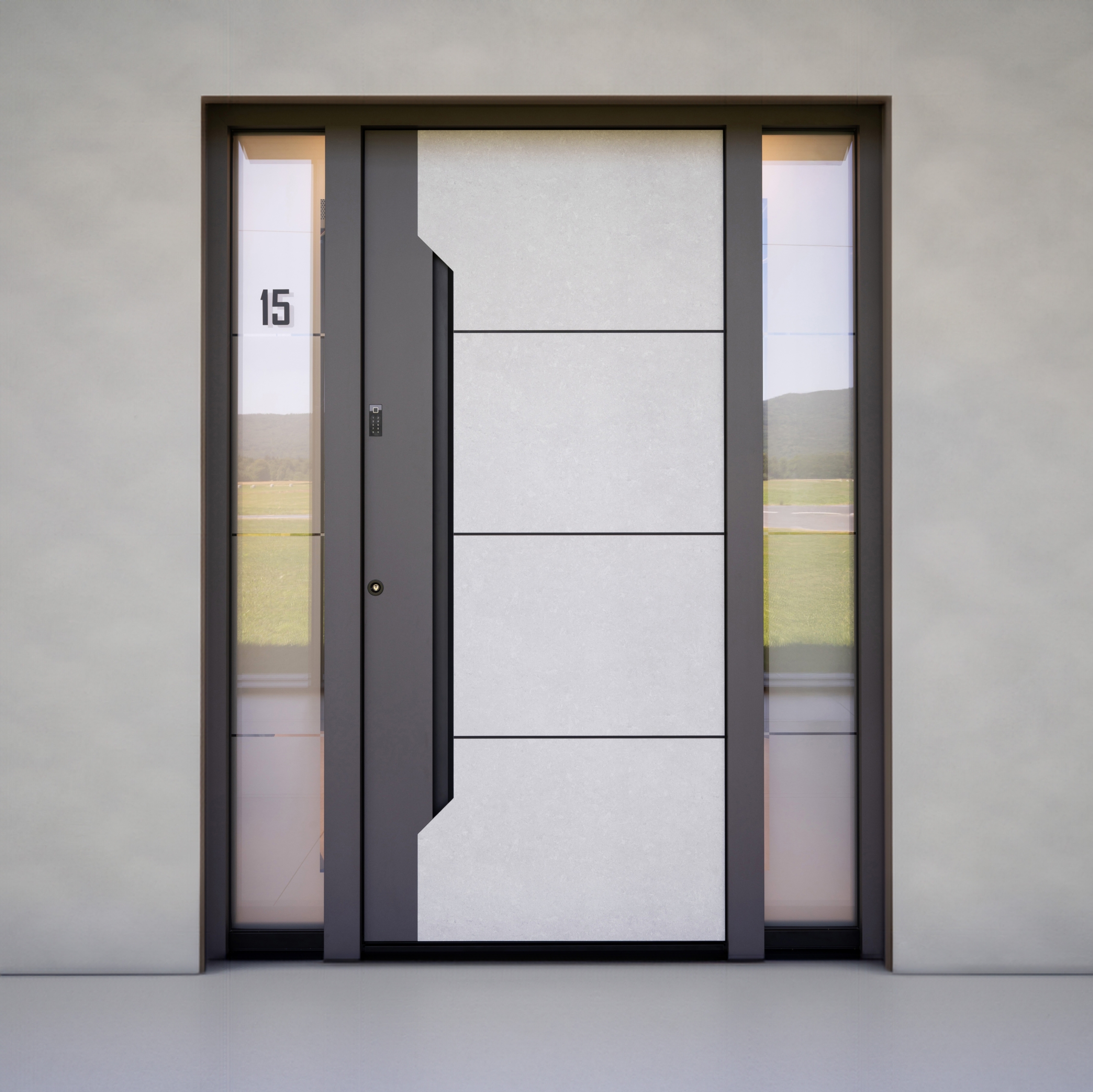
The disadvantages of aluminium front doors
- Higher initial cost: high-quality aluminium front doors require a greater initial investment than, for example, PVC doors.
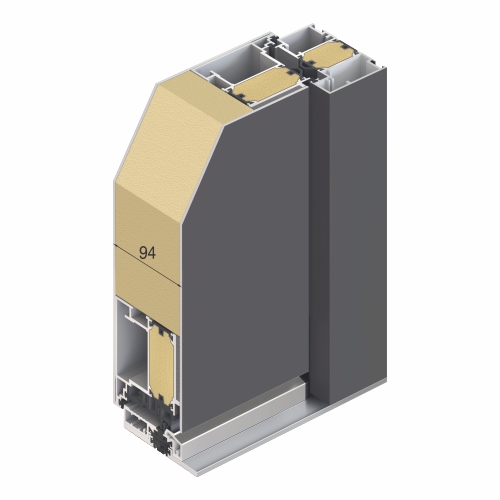
- Thermal conductivity: aluminium is naturally a good conductor of heat, but modern profile systems effectively counteract this. The multi-component construction with a thermal break and advanced insulation materials minimises heat transfer through the door, helping to achieve excellent thermal insulation performance.
Who are aluminium front doors best suited to?
Aluminium front doors are an excellent choice for homeowners looking for a long-term solution that requires minimal maintenance and who are willing to invest more upfront in lasting quality and durability.
Aluminium front doors made to measure
If you're considering an aluminium front door, pay particular attention to the quality of its construction, the profiles used and the components it incorporates when choosing a manufacturer. It is precisely these elements, in addition to the material itself, that have a decisive influence on stability, thermal insulation, security and the long service life of a door.
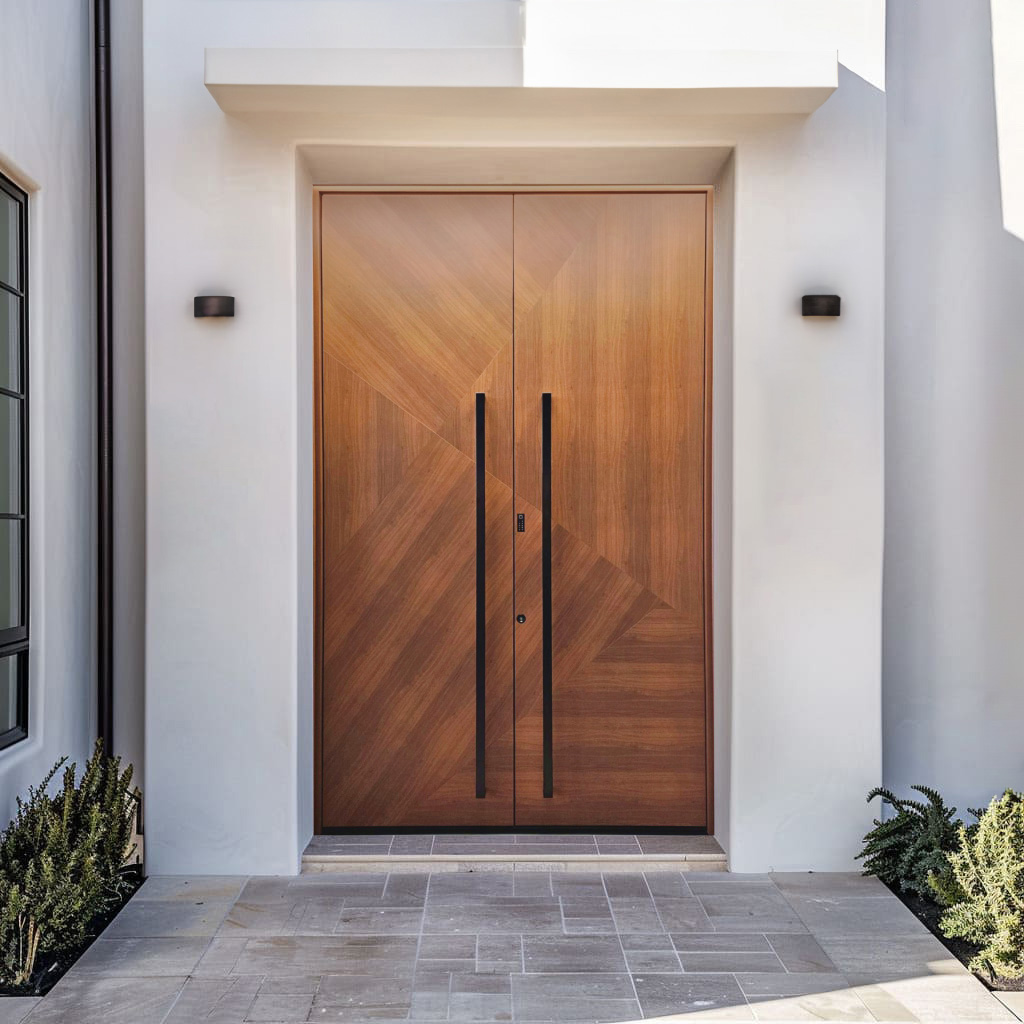
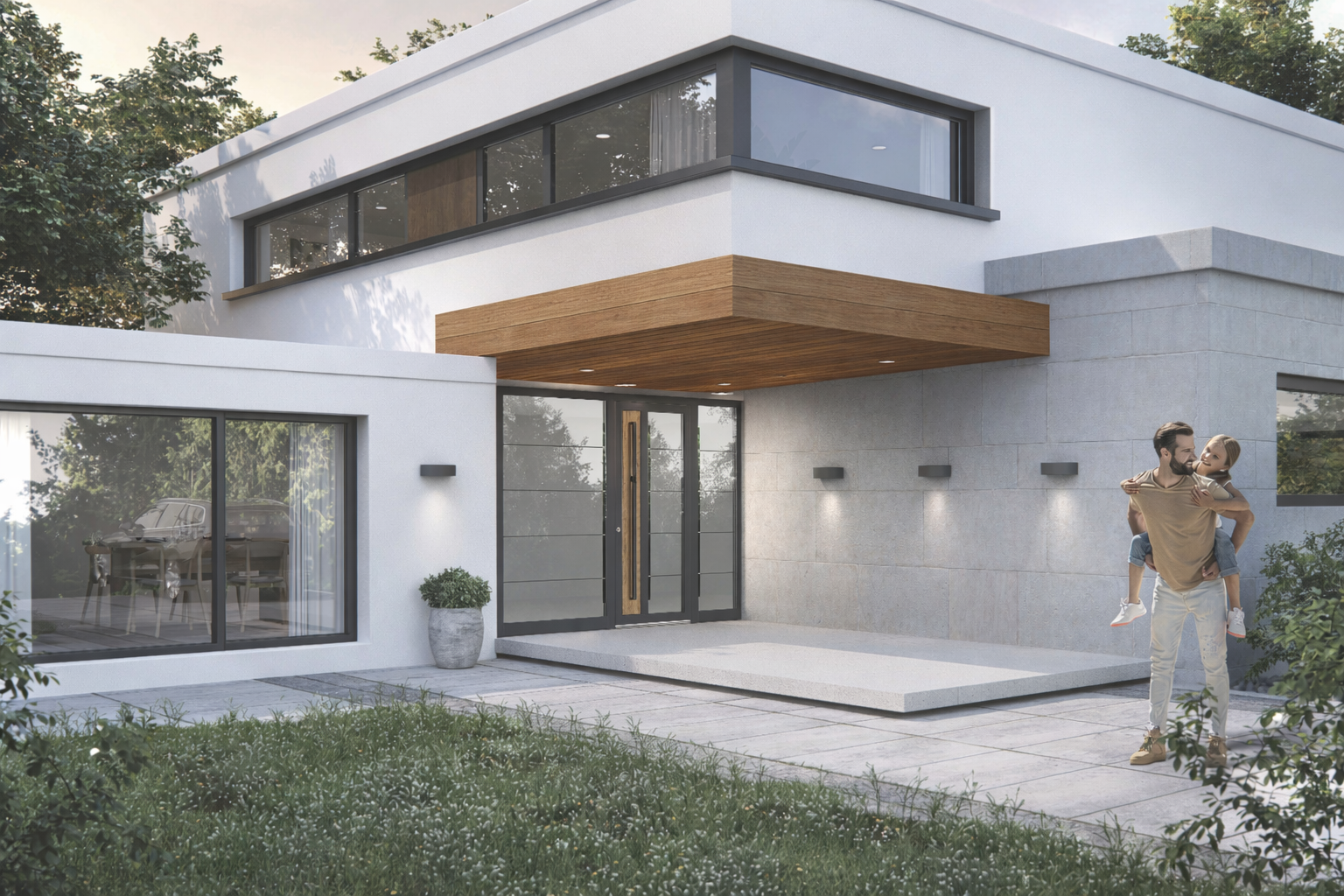
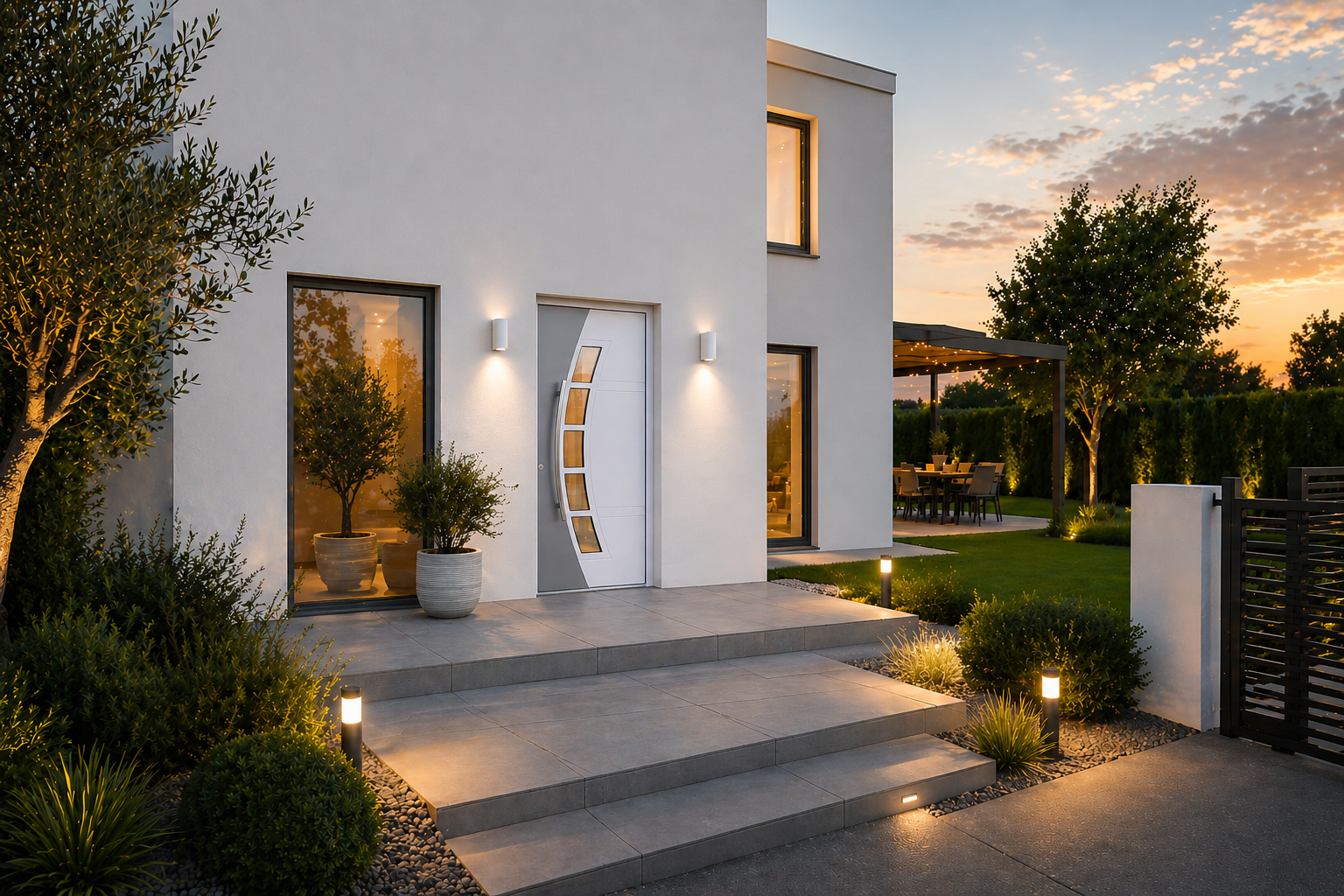
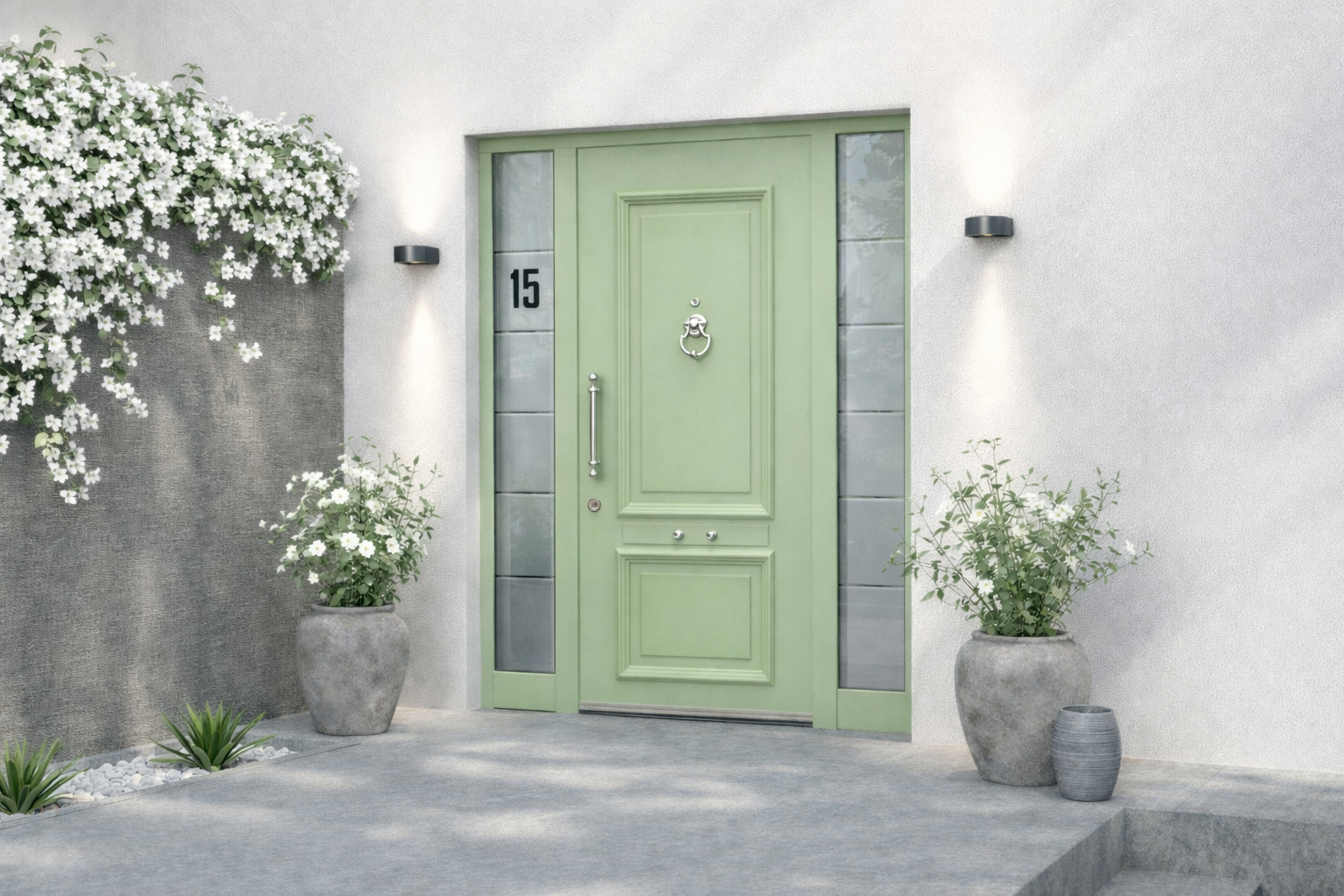
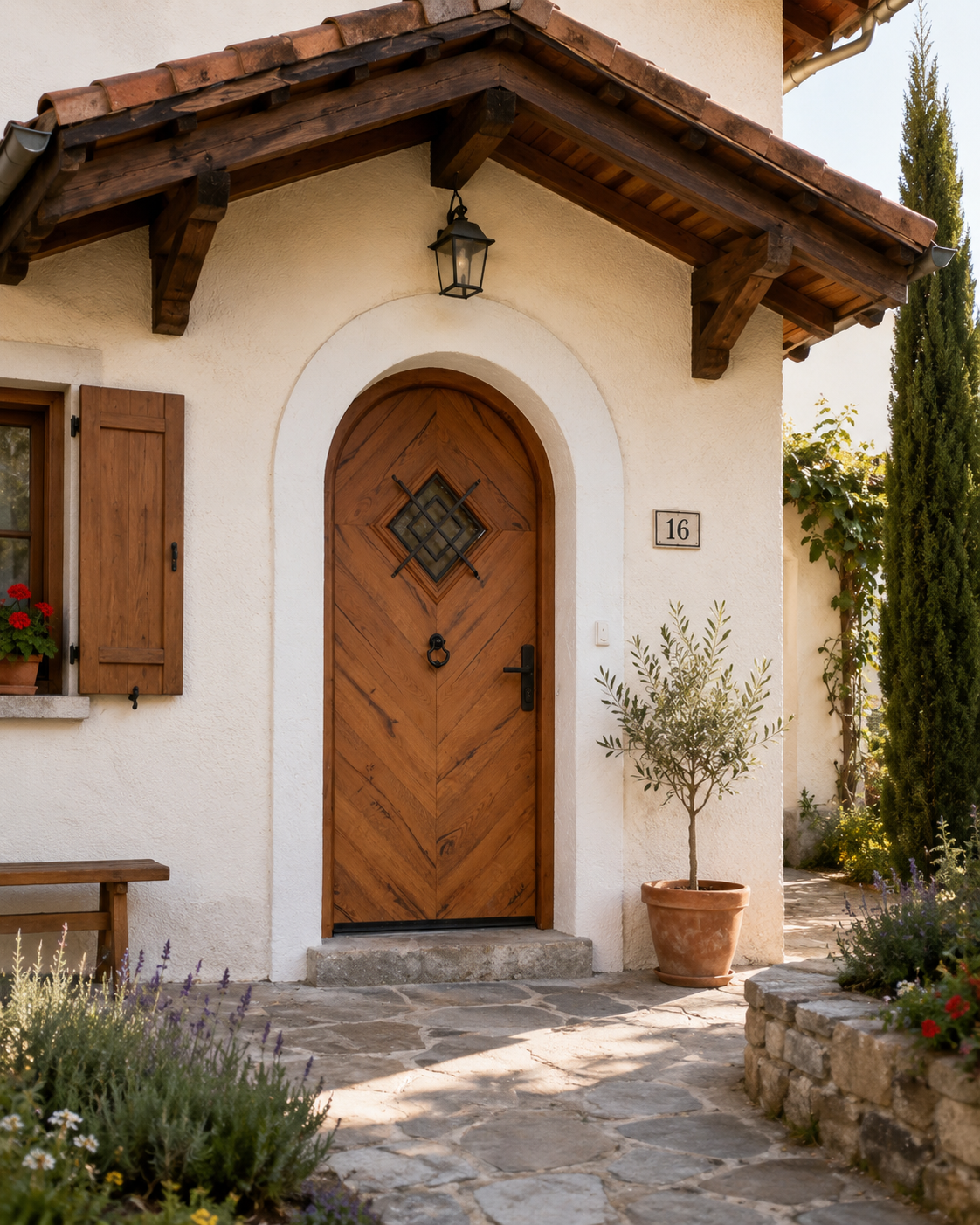
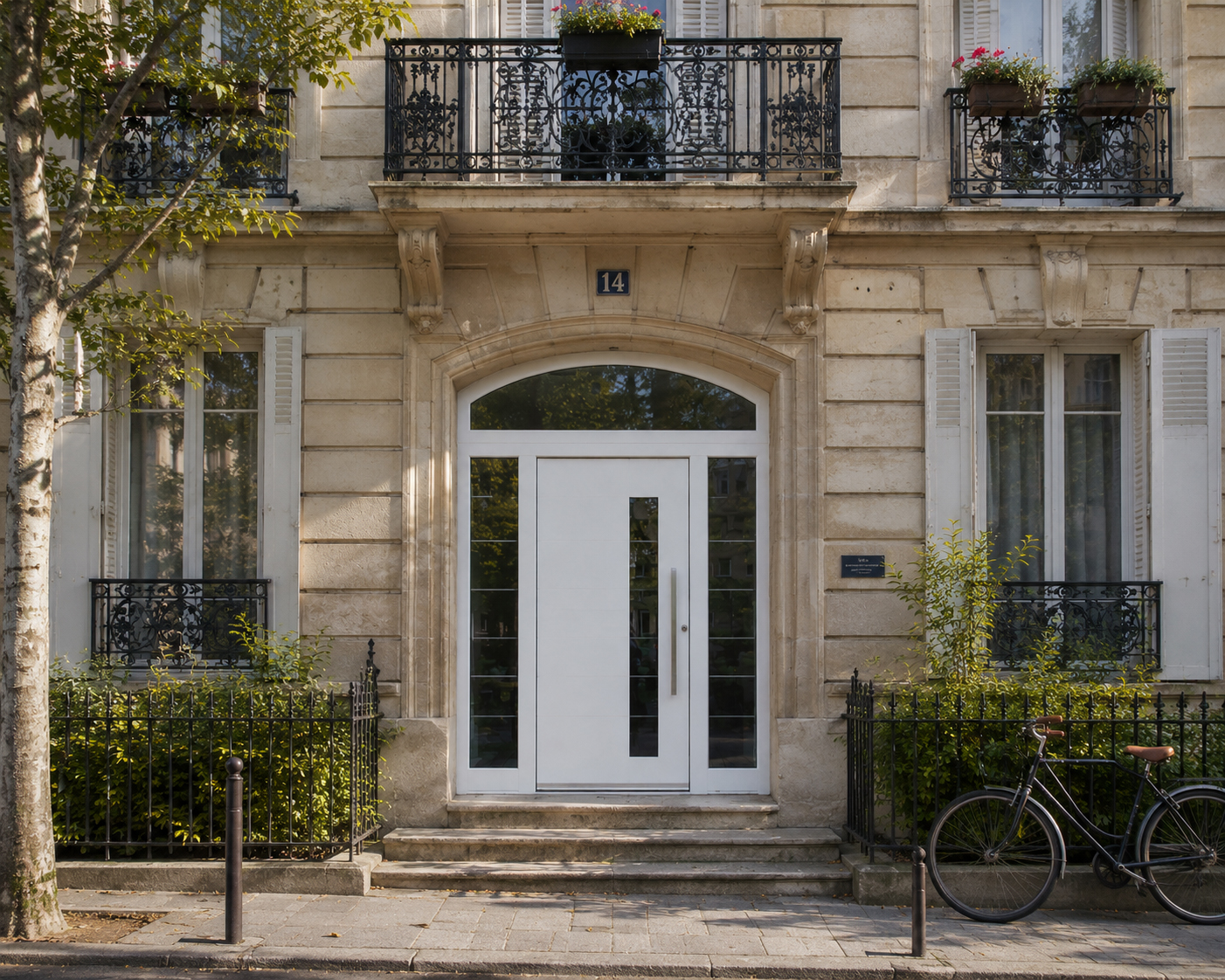
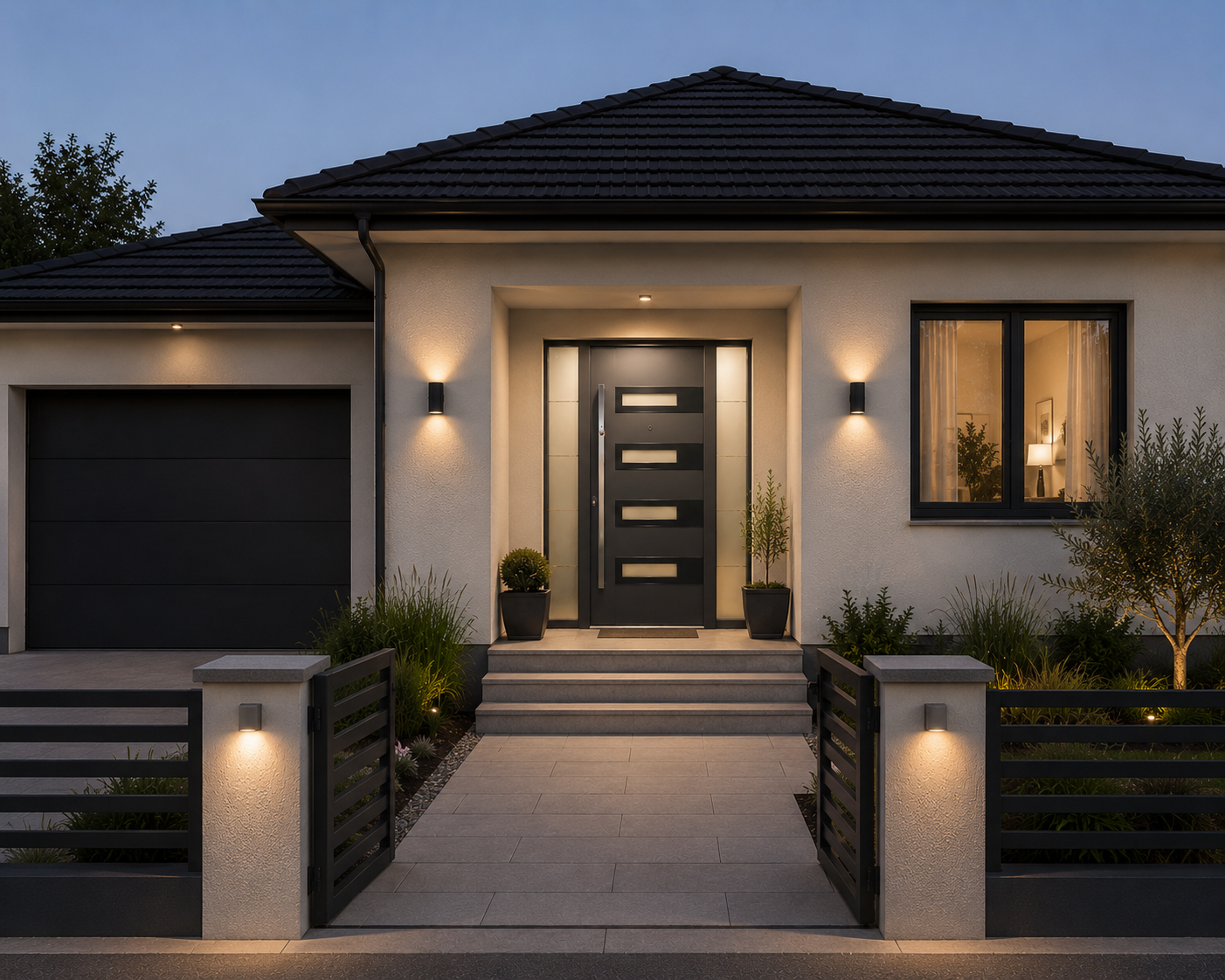
At Inotherm we specialise in aluminium entrance doors, all of which can be fully customised to suit your preferences using our configurator. Choose from more than 400 models, a wide range of colours, glazing options, handles and accessories. Wood-effect finishes are also available, offering the perfect balance between the warmth of wood and the durability of aluminium.
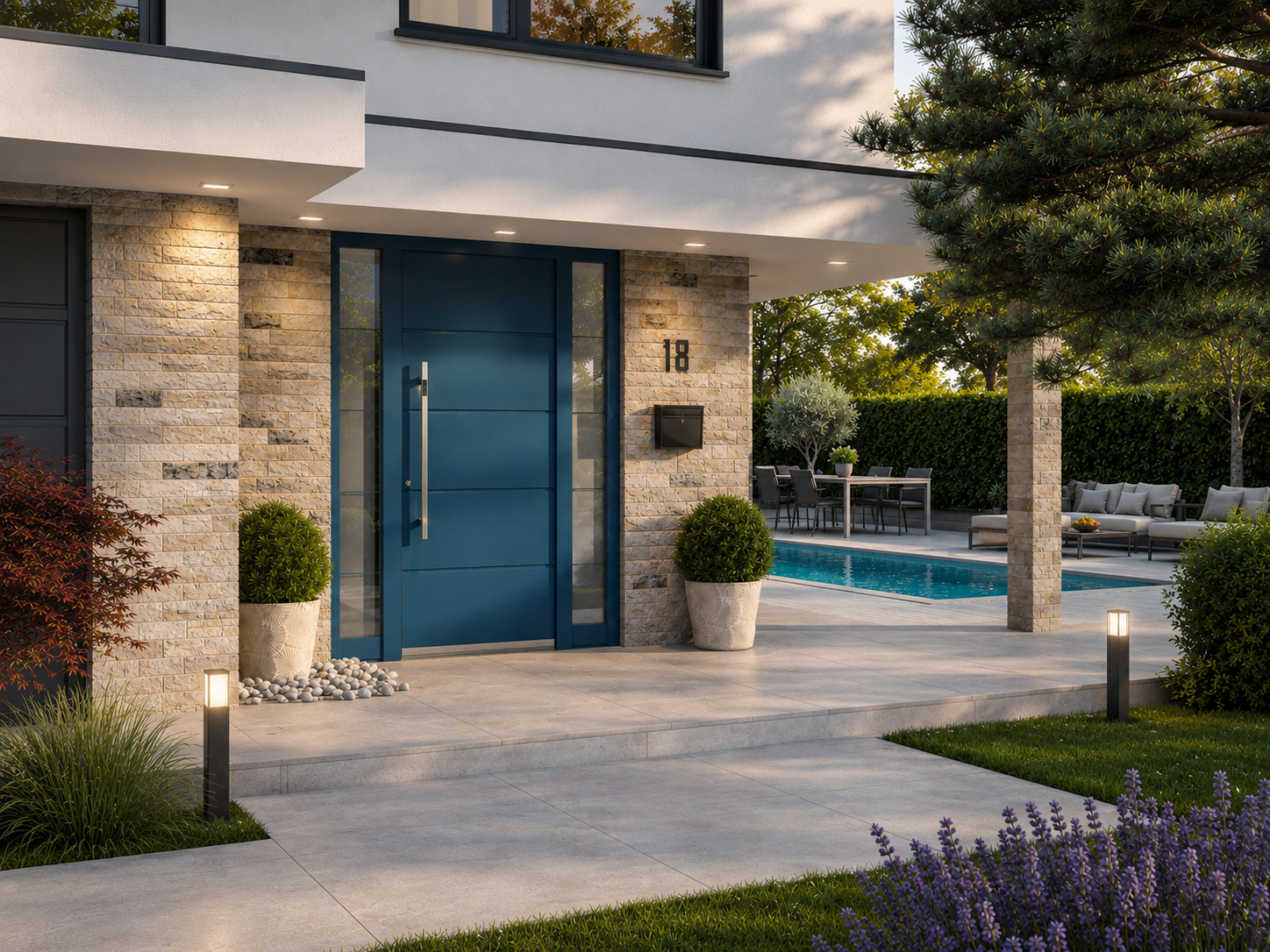
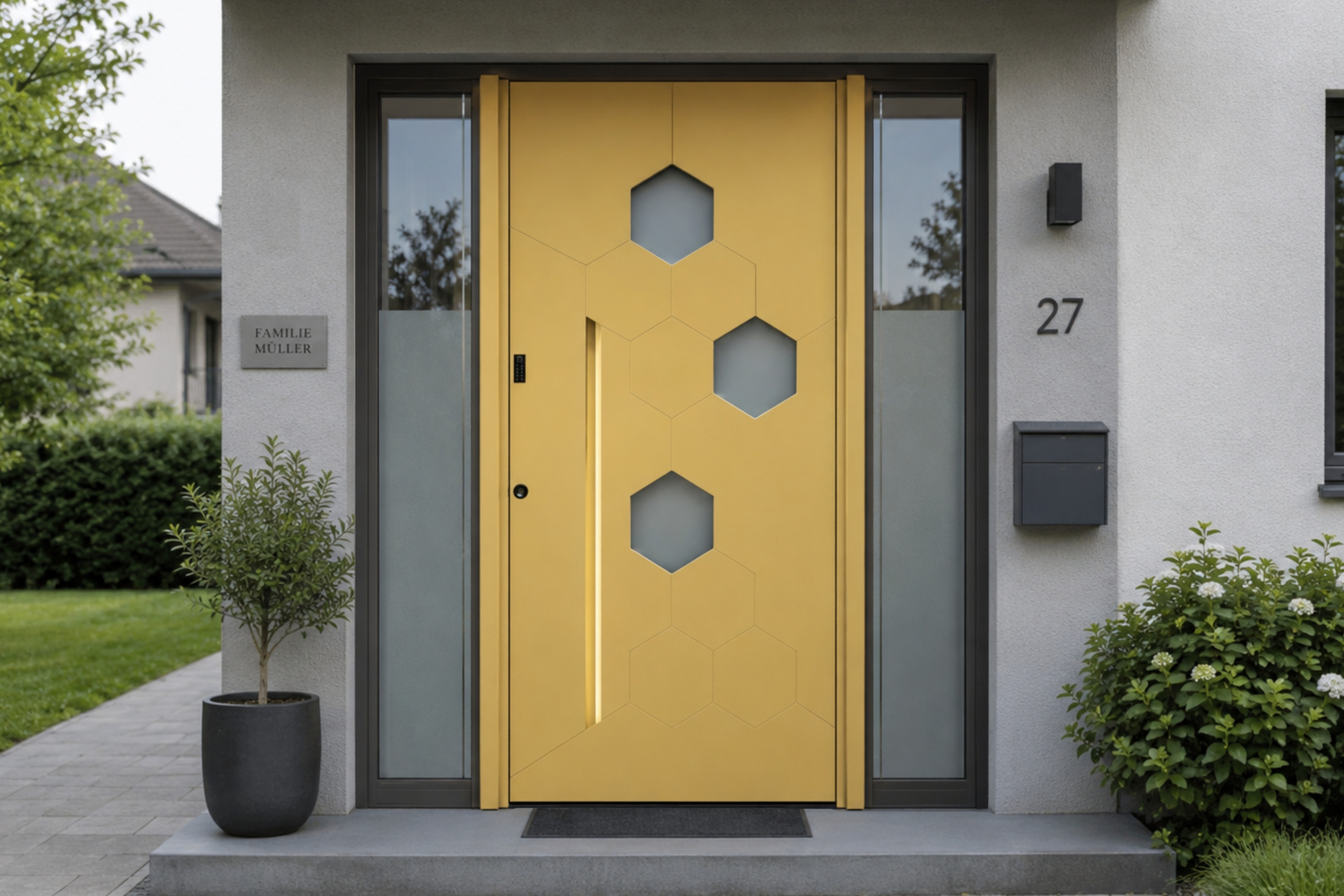
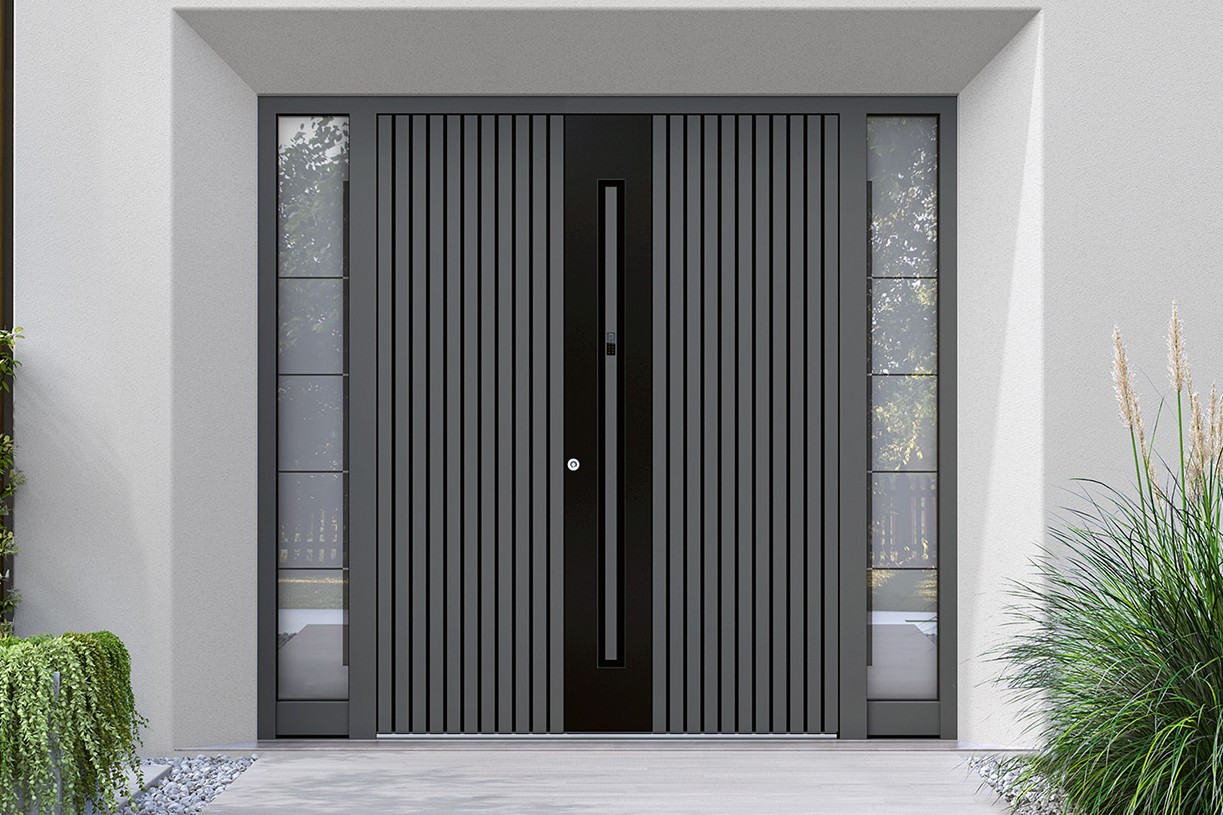
Comparing materials for a front door
When comparing different materials, it's important to remember that the performance of a front door depends not only on the material itself, but also on the quality of its construction, the components used and the standard of workmanship.
Advances in technology have significantly reduced the differences between the various materials in recent years. As a result, many aspects of a front door's performance no longer depend solely on whether it is made from timber, PVC or aluminium.
| Wood | PVC | Aluminium |
Structural stability | good | good | excellent |
Weather resistance | good | very good | excellent |
Maintenance | more demanding | simple | minimal |
Suitability at larger scales | good | limited | excellent |
Design options | wide | good | very wide |
Price | medium to high | lower | higher |
Why do most people opt for aluminium these days?
While wooden front doors were once by far the most common choice, today more and more homeowners are choosing aluminium for both new-build homes and renovation projects. This is not because wood or PVC are poor choices, but because aluminium combines a range of qualities that are more difficult to achieve simultaneously with other materials, including exceptional structural stability, minimal maintenance, a long service life and extensive design flexibility.
Aluminium entrance doors are characterised by high structural stability, excellent resistance to the elements and minimal maintenance. When manufactured to a high standard, aluminium front doors can last for decades without the need for regular repainting or refinishing of the protective surface.
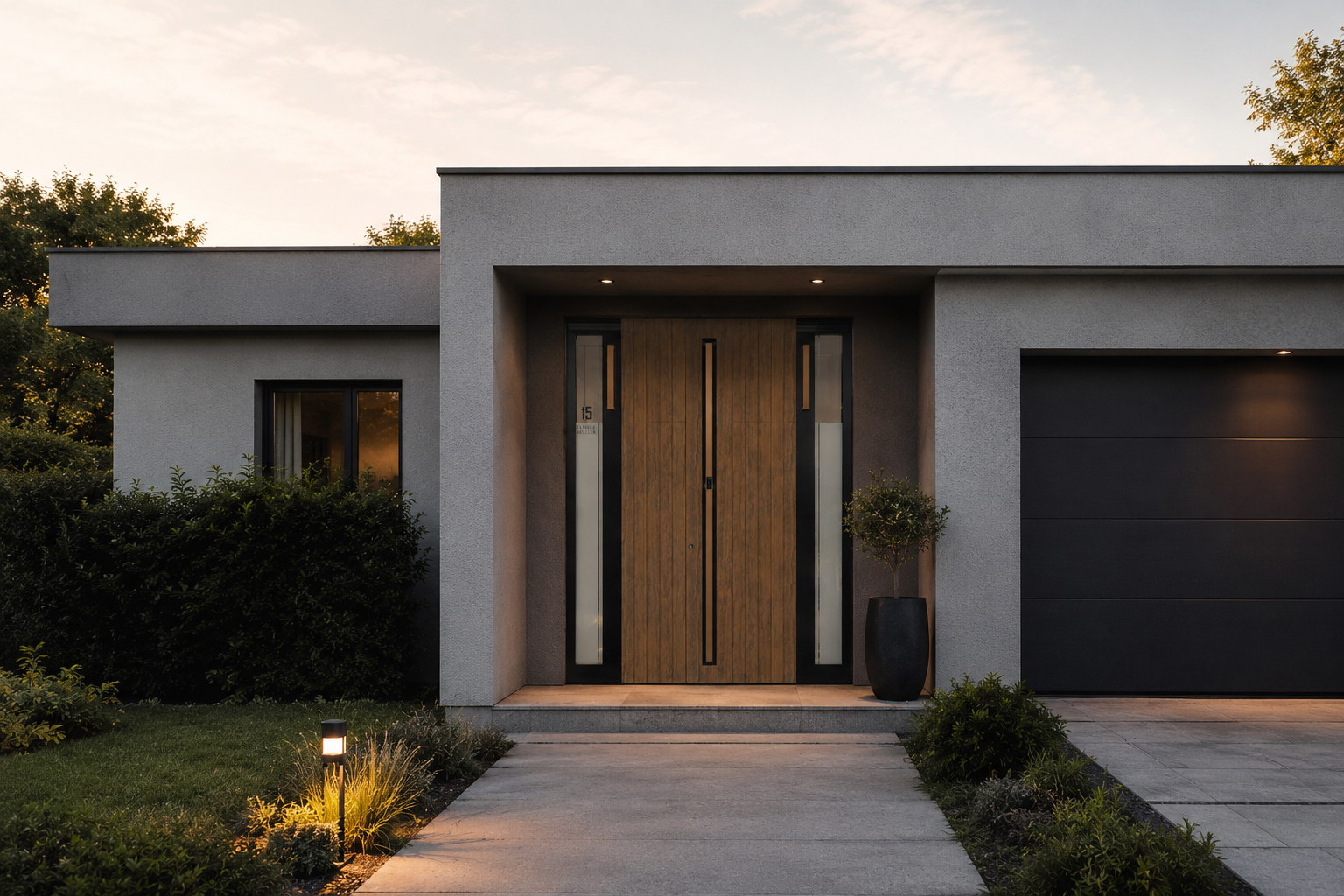
Another major advantage of aluminium is its versatility. In addition to a wide range of colours, textures and finishes, aluminium entrance doors with a wood-effect finish, which convincingly replicate the look of natural wood whilst retaining all the advantages of aluminium, are also available.
At Inotherm we have been helping customers choose their front doors for over 35 years. You can choose from over 400 models, a wide range of colours, finishes, glazing options and accessories, allowing you to tailor your doors to suit both contemporary and traditional architectural styles.
Frequently Asked Questions (FAQ)
It depends on your priorities. Wood impresses with its natural look, PVC offers a cost-effective solution, whilst aluminium combines high structural stability, minimal maintenance and a wide range of design options. However, for any material, the quality of manufacture and installation also has a significant impact on the final properties.
Provided they are manufactured to a high standard, fitted correctly and properly maintained, aluminium front doors can last for several decades. Their lifespan also depends on how they are used. While a door can be damaged through careless use, with proper care it can continue to look and perform almost as well after 20 or 30 years as it did when it was first installed. Because aluminium does not rust and is highly durable, routine servicing or replacement over the years is generally limited to individual moving parts rather than the door itself.
Yes. Modern aluminium entrance doors, featuring a high-quality thermal break, appropriate insulating infills and effective sealing, offer excellent thermal insulation properties and effectively reduce heat loss. They are therefore suitable for both refurbishments and new builds, including low-energy and passive houses.
Wooden doors are made from natural wood and require regular maintenance. Aluminium doors with a wood-effect finish replicate the look of wood whilst retaining all the key benefits of aluminium – greater resistance to the elements, a long service life and minimal maintenance.
PVC front doors are usually the most cost-effective option. However, despite their good insulating properties and ease of maintenance, it is also worth taking their structural characteristics into account when making your choice, particularly if you are planning larger scale or more complex designs.


