Blog
How do you choose the right door for your home?

The choice of a front door is not just a matter of appearance. When making a purchase, it is also important to consider the dimensions, safety, thermal and acoustic insulation, structural stability, design and other characteristics that affect the comfort, safety and longevity of the door.
In this article, we outline the key factors worth checking before buying a front door. If you’re wondering which material is best suited to your home, we compared aluminium, wooden and PVC front doors in a separate article.
When choosing a new front door, start by considering your needs
When buying a front door for your home it is important to know why you are buying a new door, or rather, what you actually need and expect from it. Otherwise, you could very easily end up making the wrong choice or even incurring additional costs.
- Are you building a new home? It may simply be that you have built a new property and an external front door is a necessary investment. In this case, you must, of course, take into account the style of the entire building, the construction method and numerous other factors.
- Are you replacing your old front door? If you have decided to replace your front door because it is worn out or damaged, or it no longer fits in with the overall look of your home, please take particular care. Consider the factors that have impacted your old external door and, when choosing a replacement, select a model that will better withstand the conditions.
- Would you like to reduce heat loss? The decision to renovate a home is often influenced by long-term energy savings. In addition to your home’s external thermal envelope, high-quality windows and energy-efficient front doors also play a key role in ensuring good insulation. If you want to avoid heat loss, insulation is, of course, a clear priority.
- Is there a lack of natural light? Front doors can also be replaced if they are no longer functioning as you need them to be. If, for example, a room lacks light, opt for a door with a built-in glass panel or a sidelight to allow for ventilation.

When choosing a door, it is highly recommended that you also consult an expert who will listen to your requirements and offer you the best solution. Tell the consultant what you want and need, and above all, what it was about the old door that bothered you.
At Inotherm, we provide expert advice and design entrance doors tailored to your specific requirements and taste.
A front door is a long-term investment
We usually only choose a front door once or twice in our lifetime, so it’s worth focusing on more than just the initial price when making that choice. It is also important to consider the service life, build quality, maintenance costs, energy efficiency and security features of the door. A well-chosen door can last for several decades.
Below, we outline the key factors that are worth checking before making a purchase.
1. Material
There is no single answer to the question of which material is best for a front door. The right choice depends primarily on your needs, preferences, budget and the architectural style of your home. The most common materials used for front doors are aluminium, wood and PVC, although combinations of these are also becoming increasingly common.
Every material has its own advantages and distinctive features. These differ in terms of appearance, maintenance, lifespan, insulation properties and other characteristics. As this is a topic that warrants a more detailed explanation, we have devoted a separate article to it in which we compare the different materials and help you choose the most suitable solution.

2. Dimensions
For new-builds you generally have complete control over the dimensions of the entrance doors, whereas in renovations these are often dictated by the existing wall opening. In both cases, it is worth considering whether you would like to complement a traditional door or entrance with sidelights or a transom light, both of which would allow more natural light into the room.
Most high-quality front doors are made to measure, as this ensures they are perfectly tailored to the dimensions of the doorway and the customer’s requirements. Standard dimensions are available mostly on standard models or doors held in stock, but they often require compromises in terms of fit or appearance.
3. Burglary protection
When buying a front door, many people wonder whether it is even worth investing in burglary protection if a burglar can enter the house through a window, but the answer is simple: home security does not depend on just one element but on the overall security of the house.
If you have top-quality windows but an old and dilapidated front door, a burglar will most likely find the easier way in. The same applies the other way round. This is why it is important to take a holistic approach to home security.
However, as we are talking about front doors, when choosing security accessories, consider the following factors:
- the thickness and composition of the profile,
- the hinges, which must incorporate suitable security features,
- the cylinder,
- the thickness of the glass, and
- the lock, which must be a multi-point lock.
Another important indicator of the level of security is the RC (Resistance Class) burglary resistance rating, which determines a door’s resistance to attempted break-ins. The standard recognises six security classes (RC1 to RC6). For residential properties, experts most commonly recommend doors with RC2 or RC3 security ratings. RC2-rated doors provide effective protection against opportunistic burglars, whilst RC3 offers an even higher level of protection against more experienced intruders who use more sophisticated tools..

Electronic locking sensors, which can be fitted regardless of the type of window or door frame, offer an additional option for even better protection of your home. The sensors discreetly and reliably report which doors and windows are open or closed. As intrusion detectors, they are designed to be system-neutral and therefore can be combined with any commercially available alarm system.
The locking mechanism is also an important safety feature. An increasing number of customers are opting for an electric door locking and unlocking system when purchasing a front door. The most popular system is a fingerprint reader, which, when combined with a motorised multi-point lock, ensures the highest level of security. One such system is Inotherm’s Inosmart, which you can select when configuring your front door. In the next section we’ll take a look at its features.
4. Smart unlocking systems
Smart entry door locking systems are becoming the norm in modern homes. They allow doors to be opened without a key, offer greater security and make it easier to manage access for family members or visitors.
At Inotherm, in our quest for the most innovative solutions, we have developed the Inosmart system. It combines no fewer than three ways of opening the door (via fingerprint, PIN code and smartphone), simple operation via a mobile app, and an algorithm that detects and remembers minor changes to a fingerprint.
The Gateway add-on is particularly handy for letting properties or holiday homes, as it allows you to unlock the door remotely from anywhere and at any time by generating a time-limited code.
5. Thermal insulation
The most important function of an entrance door’s thermal insulation is to retain heat inside the home. Poorly insulated doors can lead to greater heat loss, higher heating costs in winter and cooling costs in summer, and reduced living comfort.
The Ud value (W/m2K) tells us how much heat passes through the front door. The lower the Ud value, the better their thermal insulation properties. Recommended Ud values are as follows:
- up to 1.3 W/m²K for standard residential houses,
- 0.9 W/m²K or less for passive homes.
Inotherm entrance doors achieve a Ud value of up to 0.61 W/m²K.

Thermal insulation is not determined solely by the material of the door but also by the following:
- Door construction and insulating infill: modern aluminium doors are manufactured using a multi-layered ‘sandwich’ construction with an insulating infill. The combination of strong aluminium plates on both sides of the door leaf and the innovative infill material that characterises Inotherm doors ensures exceptionally low thermal conductivity.
- The quality of gaskets: not all gaskets are of the same quality. A triple seal is recommended for energy-efficient front doors. Inotherm entrance doors feature three continuous gaskets with vulcanised corners and a thermally broken threshold for even better sealing.
- Glass: if the door contains glass, the quality of the insulating glass plays a significant role in its thermal insulation performance. Inotherm entrance doors are fitted as standard with 6 mm-thick triple-glazed insulating glass with a Ug value of 0.5 W/m²K, which ensures excellent thermal insulation.
- Correct installation: only an experienced and authorised fitter can ensure a perfect fit into the frame, thereby guaranteeing a flawless seal.
6. Acoustic insulation
Sound insulation in doors is crucial for a comfortable living environment, particularly in today’s constantly noisy everyday life.
We are constantly bombarded with a multitude of noises and various sounds from our surroundings, and our acoustic comfort therefore also depends on protection against exposure to noise. Long-term exposure to the latter has a significant impact on our day-to-day well-being, stress levels and, of course, our health.
Sound insulation is measured in decibels (dB). The higher the value, the more effectively the door reduces sound transmission. The recommended sound insulation performance for entrance doors is between 30 and 40 dB, whilst Inotherm’s entrance doors, with their advanced sealing system, achieve sound insulation performance of up to 41 dB.
Sound insulation is influenced by the same factors as thermal insulation, primarily the quality of the door’s construction, the insulating infill, the gaskets, the glazing and a professional installation.
7. Warping
Temperature differences between the outside and inside, damp and exposure to sunlight can cause lower-quality entrance doors to warp. This results in difficulty closing and locking, poorer sealing, and reduced thermal and acoustic insulation.
When choosing a front door, you should therefore check how the manufacturer ensures the door’s structural stability. Inotherm’s entrance doors feature an innovative design that prevents warping:
- A thicker design with up to 30% more material than standard profiles.
- A patented door leaf system featuring a layer that prevents the bimetallic effect – warping caused by temperature differences between the outer and inner parts of the door.
- A structural threshold profile that reinforces the construction and ensures the stability of the entire door assembly.
This means that even after years of use, the door retains its shape, seals well and opens and locks smoothly.

8. Design and customisation to suit your needs
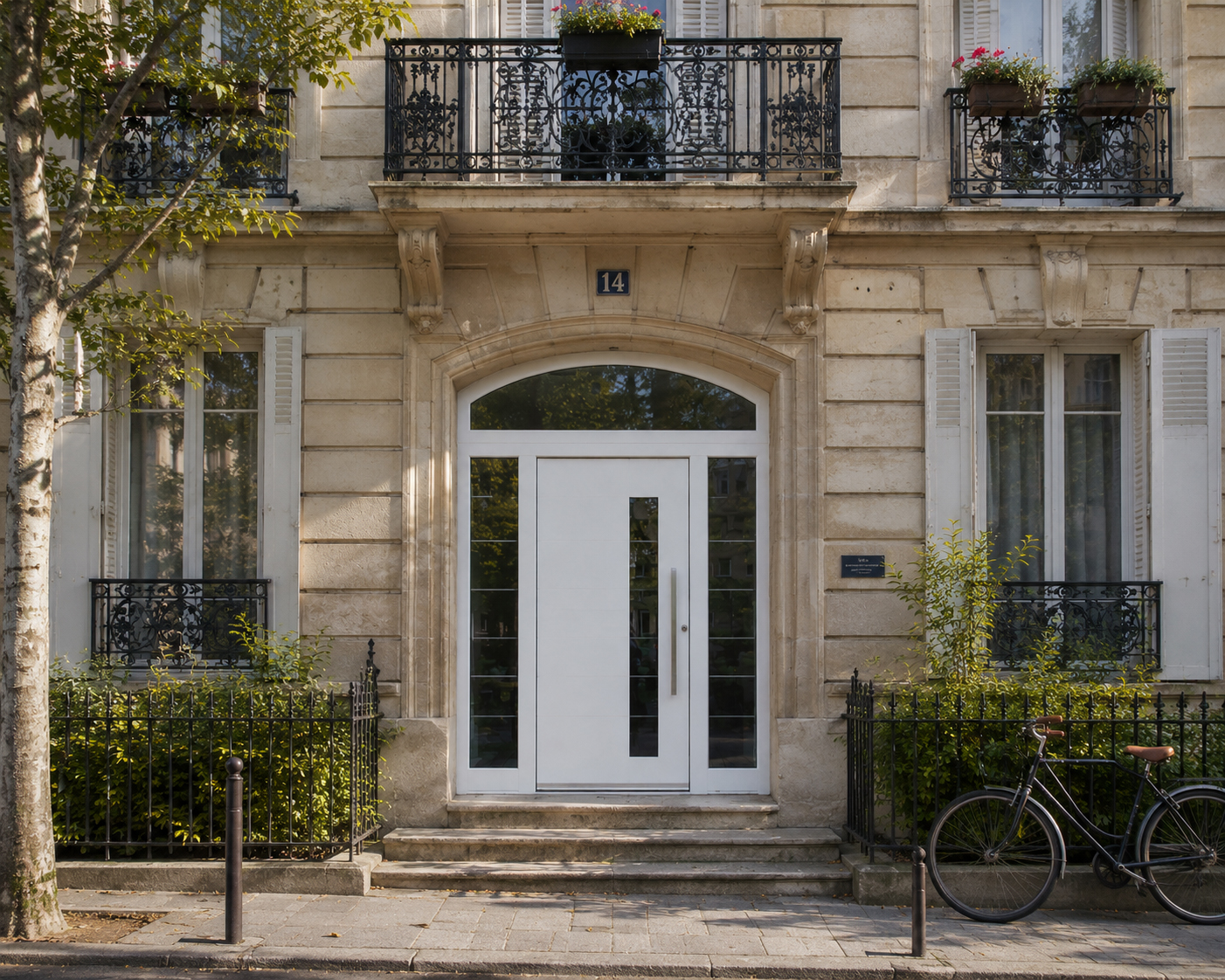
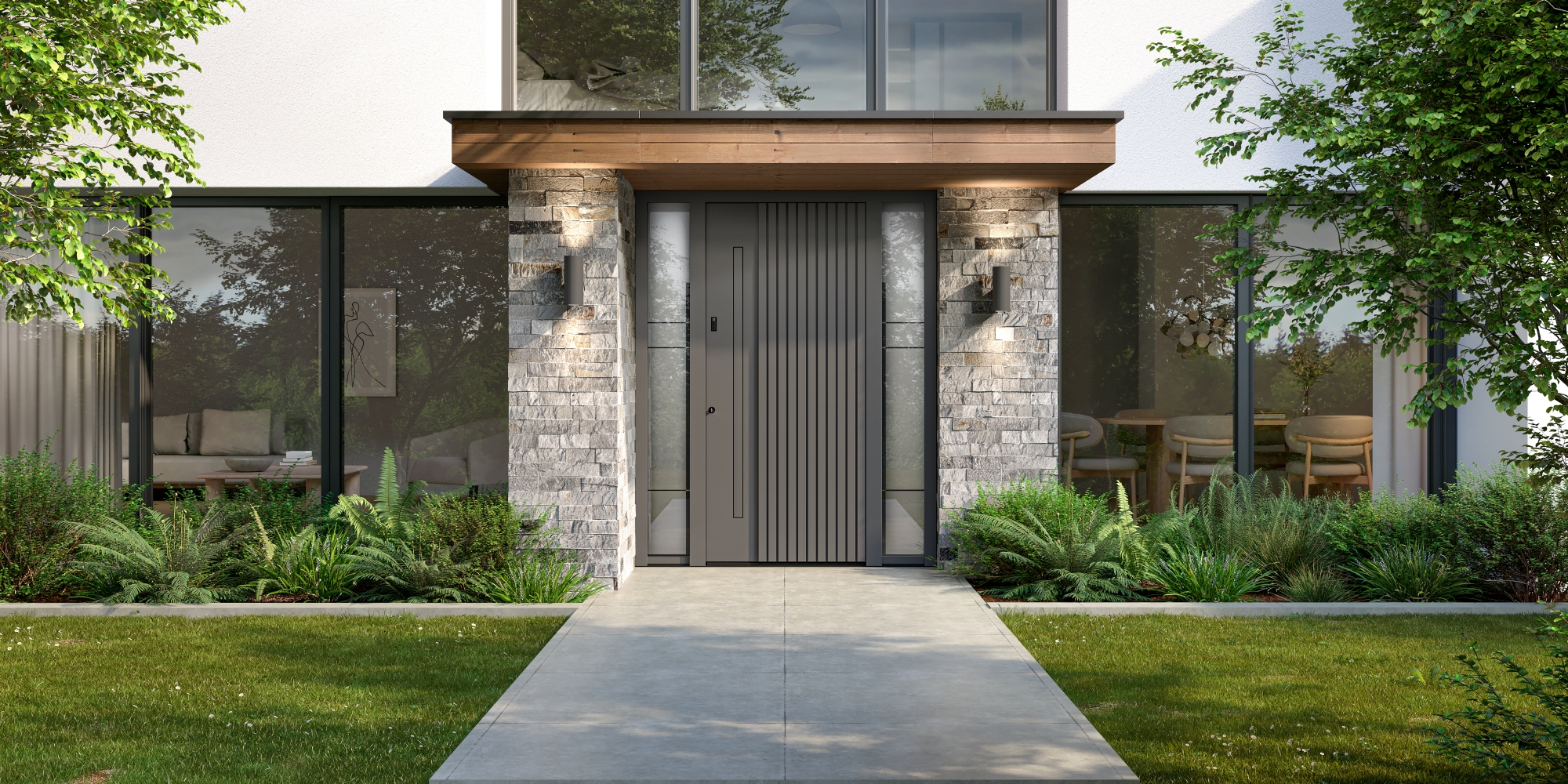
The front door is one of the most striking features of a home, so its appearance has a significant impact on the first impression. As well as the technical specifications, it is also worth choosing a design that reflects your personal style, complements the architecture of your home and remains timeless for decades to come. With a wide range of customisation options, you can create an entrance that perfectly suits your preferences.
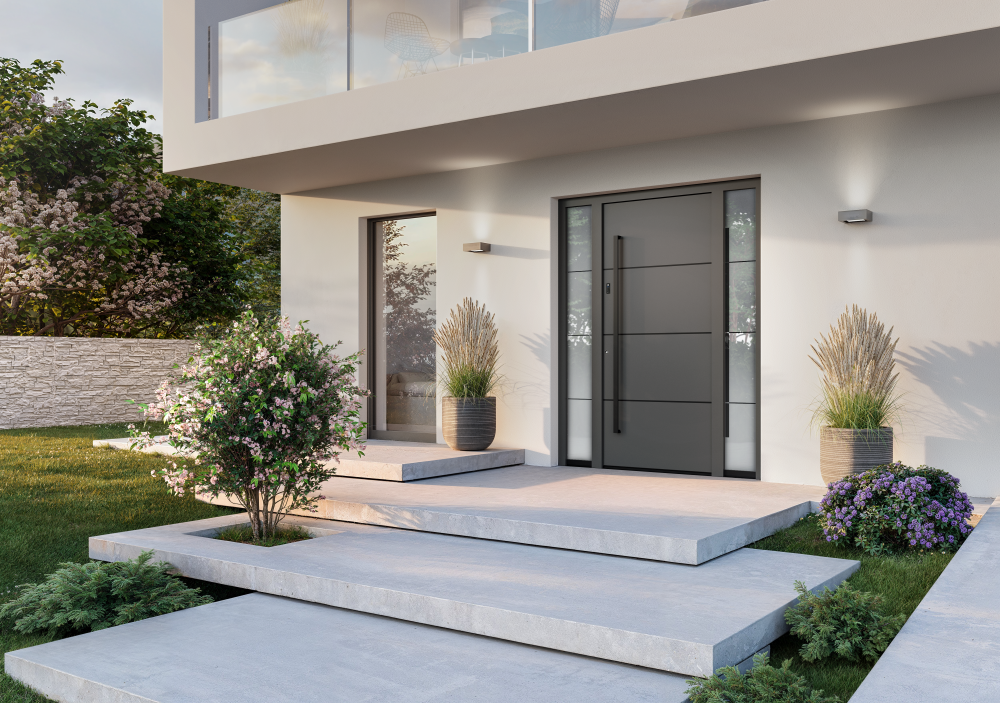
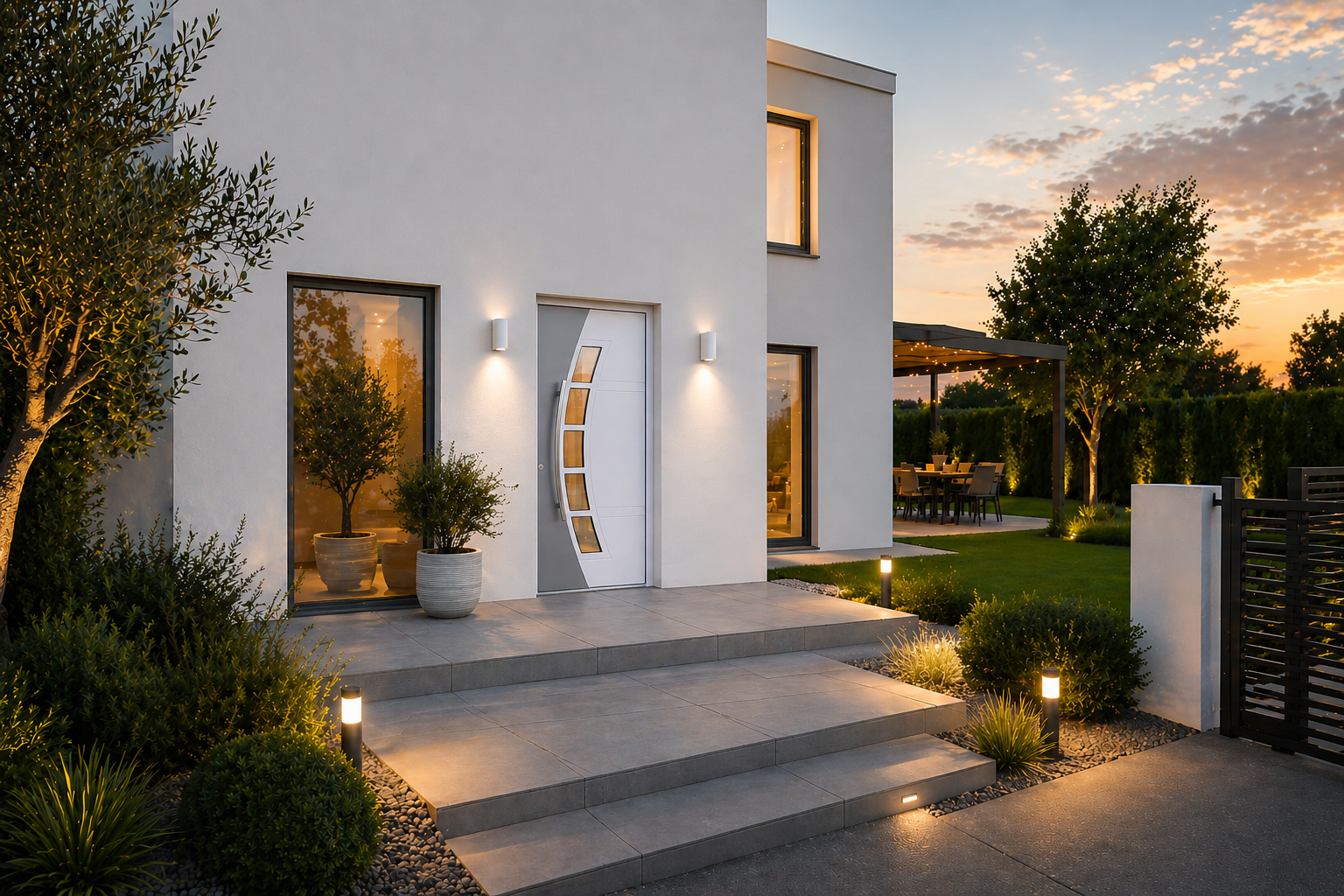
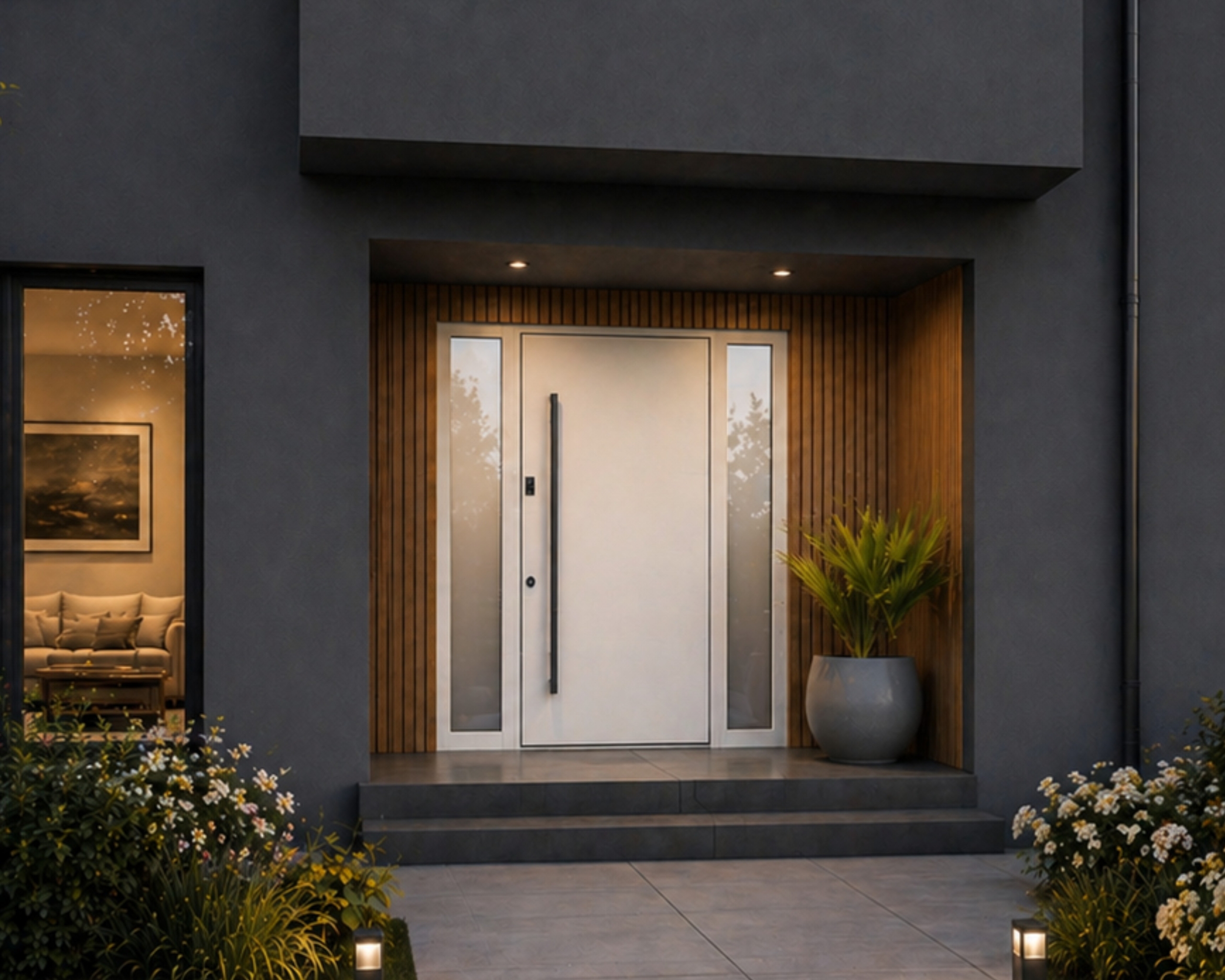
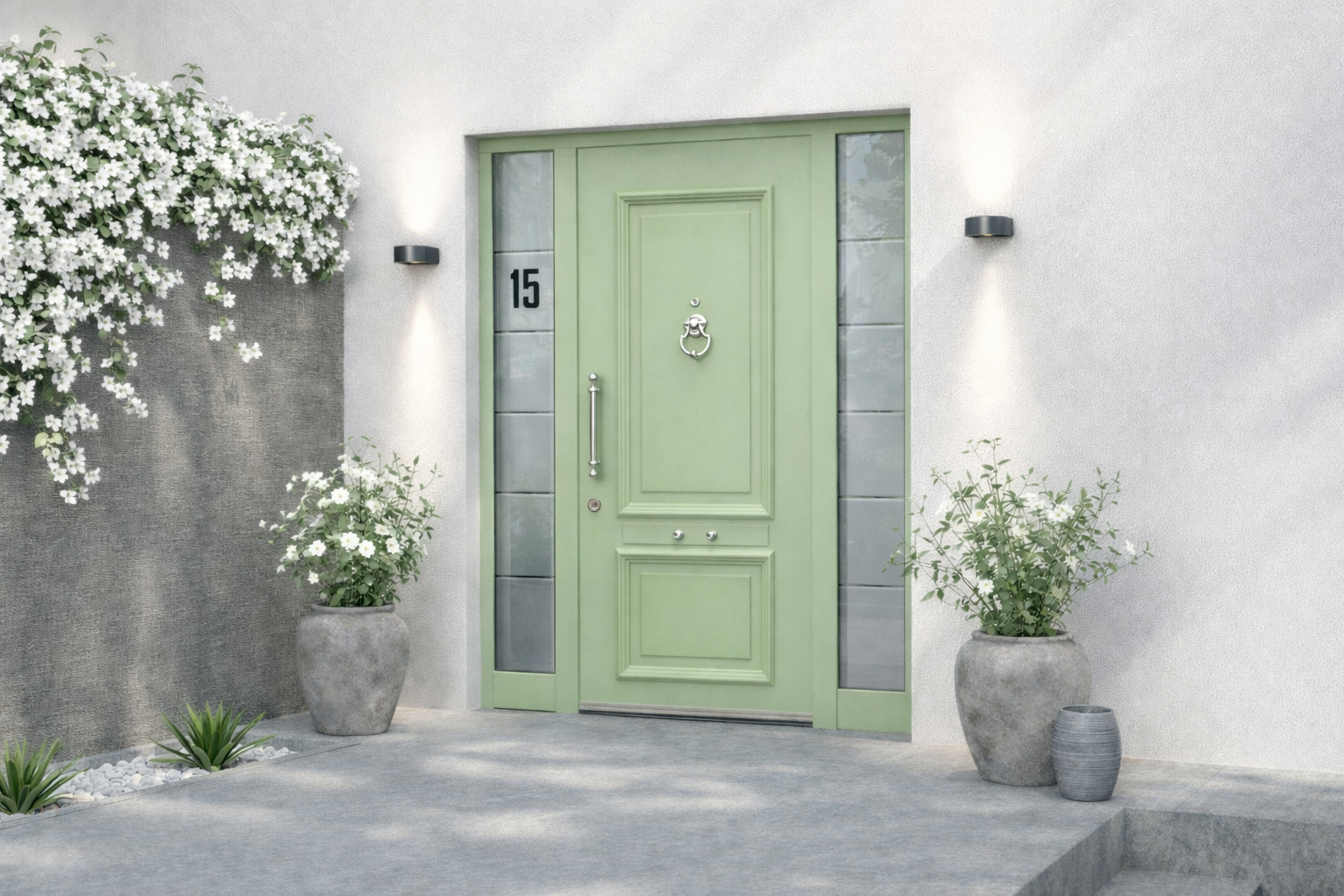

Colours
You can choose between single-colour, two-colour or multi-colour versions of the doors. It is very important to choose them in daylight, and in the case of colour combinations it is advisable to check the samples at the property, where they can be assessed under the various ambient lighting conditions.
If you want to keep up with the trends you should also consider which shades are popular currently or choose those that create timeless combinations. Black or grey doors, for example, look good against a white or light-coloured façade, whilst white doors also work very well against grey surfaces. And wood, in all its shades, never goes out of fashion.

Glass
Glass doors add an aesthetic touch and allow just the right amount of light into the room. As well as the aesthetic appeal, it is important to choose high-quality insulating glass with a low Ug value. You can also further personalise your front door with decorative, tinted or stained-glass panels, as well as engravings such as a house number, a name or other motifs.

Pull handles and lever handles
Pull handles and lever handles are not merely aesthetic additions but an important part of the day-to-day use of an entrance door. They are available on the market in various shapes, lengths, materials and finishes, and are increasingly incorporating smart features such as fingerprint readers and LED lighting.
As modern entrance doors are becoming larger and heavier, it is important that the pull handles and lever handles are of high structural quality so that they can withstand long-term mechanical stress and remain stable and do not become loose, even after years of use.

Comprehensive solutions for your entrance
The most attractive entrance is not just a high-quality door, but is made up of carefully coordinated elements. Sidelights and transom lights, a glass canopy, a house number, a letterbox and ambient lighting ensure that the entrance appears as a cohesive whole and creates a good first impression for visitors to your home.

A step towards a complete entrance solution
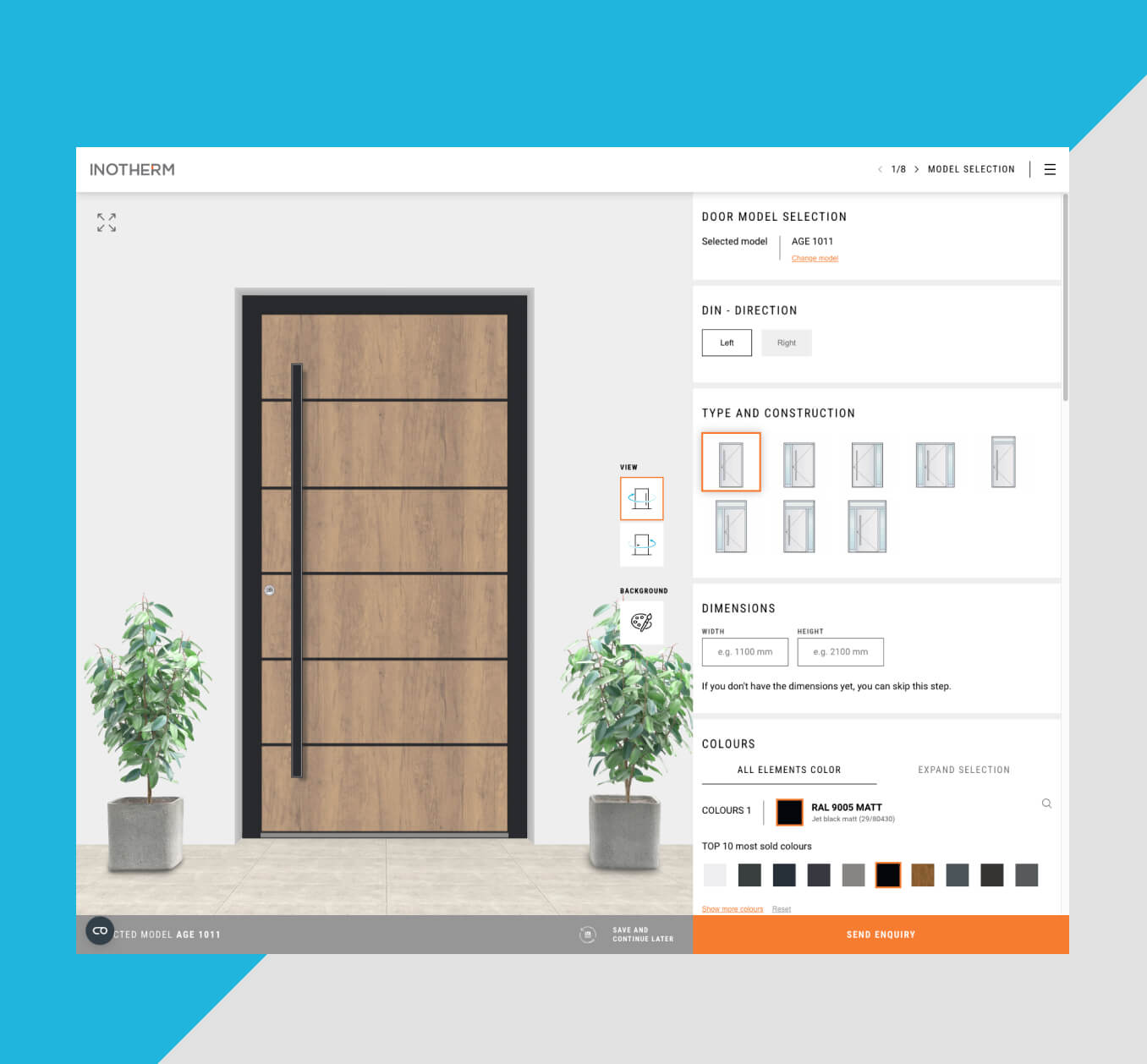
Using Inotherm’s online configurator you can try out different combinations of colours, glass, handles and accessories to create an entrance that will blend in perfectly with your home.
9. Maintenance requirements
Front doors are exposed to numerous external environmental factors on a daily basis, which is why proper protection and maintenance are essential for ensuring their long life. The biggest nuisance is undoubtedly the changeable weather, which brings with it temperature fluctuations, dust and other forms of dirt.
Certain materials require more care and better protection than others.
- Wooden doors therefore require the most attention, as they need to be protected from both the sun and moisture. It is also necessary to repaint or refinish the surface every few years. By cleaning them regularly with special wood cleaners, we ensure that the doors retain their attractive appearance for a long time.
- On the other hand, aluminium front doors do not require much care or maintenance. It is sufficient to clean them a few times a year using special cleaners for painted aluminium surfaces or a mild, pH-neutral or alkaline cleaner. You will, however, achieve the best results when caring for your front door by using the original cleaning products.

Always clean the doors in moderate temperatures, ensuring that the surface temperature does not exceed 25 degrees Celsius. After cleaning, wipe the material with a soft cloth.
10. High-quality installation
We’re almost done, but we mustn’t leave out a very important factor that could have a significant impact on how satisfied you are with your chosen entrance. Even the most beautiful and high-quality doors can be let down by poor installation.
A high-quality installation of an entrance door is crucial to ensuring it remains functional throughout its lifespan. Only a high-quality installation will ensure that your new front door continues to function flawlessly and provides excellent sound and thermal insulation for decades to come. That is precisely why we strongly advise you to leave this task to experienced professionals.
The method of installation always depends on the building, the type of construction and the condition of the wall opening. A good installer will check all the relevant technical details when measuring up and advise you on the most suitable installation method to ensure that the door fulfils its intended function, provides effective insulation and has a long service life.
And finally…
Choosing a front door is a decision that will affect your home for many years to come. As well as its appearance, it is therefore worth considering its security, thermal and sound insulation, structural stability, the quality of the installation, and the options for customising it to your preferences.
When comparing different suppliers, don’t just look at the initial price, but also at the build quality, the materials used, the warranty and the long-term user experience. A well-chosen front door will, in fact, provide you with security, comfort and reliable performance for decades to come.

If you’d like to try out different models, colours, glazing options and accessories, you can create your own design using Inotherm’s online front door configurator. Our team of experts is also on hand to offer further advice or help with your choice.
Frequently Asked Questions (FAQ)
For most residential houses experts recommend front doors with security rating RC2 or RC3. RC2-rated doors provide effective protection against opportunistic burglars, whilst RC3 offers a higher level of protection against more experienced intruders who use more sophisticated tools. The choice depends primarily on the location of the building and the desired level of protection.
For standard residential houses, a Ud value of up to 1.3 W/m²K is recommended, whilst for passive houses, a Ud value of 0.9 W/m²K or less is most suitable. The lower the Ud value, the better the thermal insulation provided by the door. The best models from Inotherm’s range achieve a Ud value of up to 0.61 W/m²K.
Of course. And that includes the very high-quality front doors made by Inotherm. For those who enjoy shopping from the comfort of their own home, we at Inotherm have created a modern and fully digital shopping experience. To get started, why not take a virtual tour of our showroom, and then use the entrance door configurator to create a front door that’s entirely tailored to your needs? Thanks to the intuitive user interface the process is quick and simple, and you can also share your design with your architect or your loved ones, or save it and finish it later. If you submit an enquiry about the door you’ve created, our experts will send you a no-obligation quotation. The configurator works on a computer as well as on a tablet or smartphone.
There is no single material that is universally the best. The choice depends on your preferences, budget, maintenance requirements and the architecture of your home. The most common materials are aluminium, wood and PVC, each of which has its own benefits. We have prepared a detailed comparison of the individual materials in a separate article.
It is not possible to quote a price for an external entrance door without knowing the specifications, such as the material, dimensions, glazing and other accessories. Most doors – including all Inotherm doors – are bespoke, made to the customer’s specifications, which is why prices vary from case to case. So how, for example, can you find out roughly how much an aluminium front door that you like might cost? One solution is to use Inotherm’s entrance door configurator. Using it you can create a front door to suit your taste in just a few minutes. Start by choosing your favourite model and then customise its dimensions, colours, glazing and other features. You then submit an enquiry for your configuration and we’ll get back to you with a no-obligation quotation.
When choosing a front door you should check, above all, its material, thermal and sound insulation, burglary protection, dimensions, structural stability, locking mechanism and the quality of the installation. For standard houses, a Ud value of up to 1.3 W/m²K is recommended, whilst for passive houses, a Ud value of 0.9 W/m²K or less is most suitable. From a security perspective, experts most often recommend doors with RC2 or RC3 security ratings.
The best front door is one that suits both the style of your home and your needs and requirements. It is essential that it is resistant to external factors, does not warp, and at the same time provides a high level of insulation and burglary protection. Although it is possible to produce a high-quality product from any of the most popular materials used for doors, it certainly pays to consider an aluminium front door. Aluminium is a modern material from which we can easily create doors in any style. What’s more, they are superbly insulated and offer excellent security.


